
Cuyahoga County’s Financial Empowerment Center aims to break cycles of debt, build debt-free futures

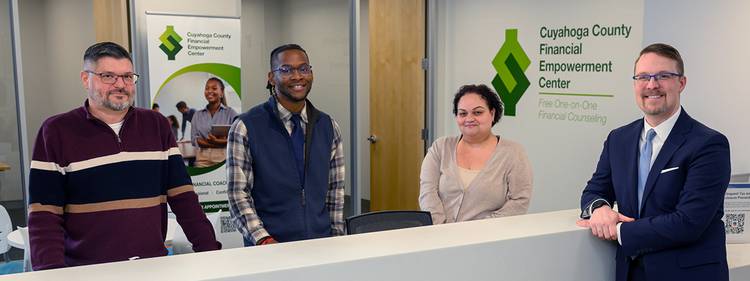

Economic stability is bigger than any individual’s bank account. Connecting people to wealth-building resources makes for a more resilient community, say Cuyahoga County Executive Chris Ronayne and other county officials leading the new Financial Empowerment Center, billed as a centralized hub for economic mentorship.
 Cuyahoga County Executive Chris Ronayne speaks at the Financial Empowerment Center.“When people can stay in their homes, support their families, and build financial security, our whole community grows stronger,” said Ronayne in a March 19 press release. “This center gives residents the tools and guidance to stabilize their finances and build a more secure future.”
Funded in part by a $150,000 grant from the national Cities for Financial Empowerment Fund (CFE Fund), the center offers free, one-on-one support to help residents pay down debt, increase savings, and establish credit.
Prioritizing public health means equipping residents to break generational cycles of debt, says Cuyahoga County treasurer Brad Cromes.
“Financial health is a social determinant for a community,” Cromes says. “That was a motivating factor for us. Catching people when they’re at a crisis point is our responsibility.”
The financial hub, located on the first floor of Cuyahoga County’s downtown Cleveland headquarters, offers assistance to all residents. The initiative is part of a broader framework of economic support, ideally acting as a roadmap for navigating crises, says Cromes.
Along with the CFE Fund, key contributors include KeyBank, First Federal Lakewood, and the Benjamin Rose Institute on Aging. Through this public-private partnership, visitors have access to basic financial resources as well as wraparound tax and lending services.
“We’re looking at this as the county’s front porch,” Cromes says. “Our role is to make sure people know these resources exist.”
Not one-and-done
Residents are invited to visit for debt advice, tax assistance, or guidance on avoiding foreclosure. Once immediate crises are resolved, counselors are available to focus on long-term goals such as legacy planning and wealth building, Cromes adds.
“These services are available to anyone, but we’re emphasizing people coming off of public assistance, then folks who are tax delinquent,” he explains. “These are not one-off conversations. These are basic conversations, plus follow-up for as long as a client needs. If you get a bank account, let’s build your credit, then that legacy plan.”
Helping residents avoid future emergencies is the Financial Empowerment Center’s overriding mission. Stabilizing someone’s circumstances also brings much-needed trust to the client-provider relationship, says Michael Billnitzer, vice president for housing and financial wellness at Benjamin Rose, the center’s primary counseling partner.
“People don’t trust these institutions,” Billnitzer says. “[At the center], they see they are not alone and feel safe coming back to us. That trust carries over when we make a recommendation for another resource.”
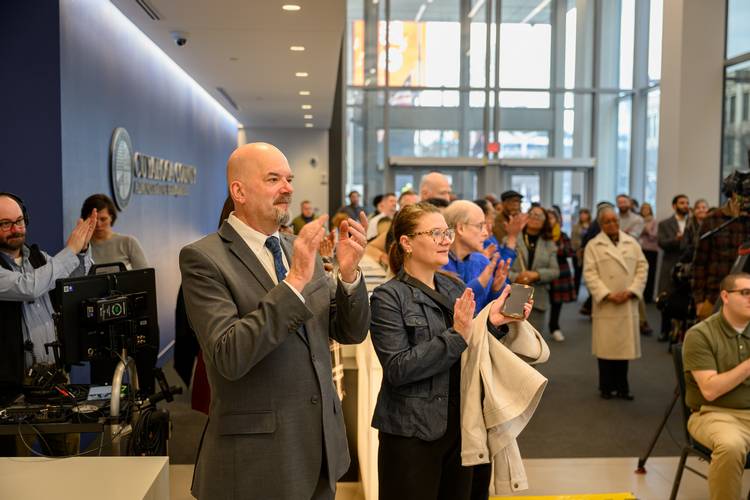
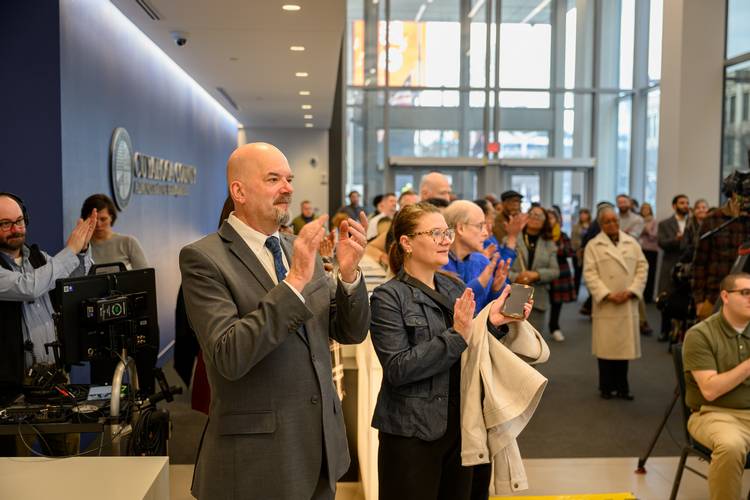 Officials applaud at the opening of the Cuyahoga County Financial Empowerment Center, where center residents can get free, one-on-one support to pay down debt, increase savings, and establish credit.Understanding their options is powerful when residents discover the equity in their homes or the potential to rebuild their credit. Billnitzer explains that, with clients who earn between $17,000 and $20,000 annually, even small changes can make an enormous difference.
“Let’s get people to a 10% reduction in debt and a 10% increase in savings,” he suggests. “That could put $2,000 in their pockets annually. That may not seem like a lot to you and me, but these are game-changing numbers. They mean someone can buy medicine and food—or won’t be put out on the street.”
The county’s new Financial Empowerment Center has assisted 110 individuals and families over its first month, building on a national model that has helped clients reduce their debt by over $344 million, according to the press release.
Solving complex financial challenges is not a one-and-done prospect, says treasurer Cromes. Instead, he explains it requires a sustained and focused strategy.
“We are in this for the long-term,” Cromes says. “We want to grow our capacity with our network partners. It’s not about replacing anything that exists but providing added support to help people succeed.”
Cuyahoga County’s Financial Empowerment Center is in the first floor lobby of the County Administrative Building, 2079 E. 9 St., Cleveland, 44115.Call (216) 443-7575 or email the center.
