
Hidden retreat: A rare chance to explore Terminal Tower’s Greenbrier Suite
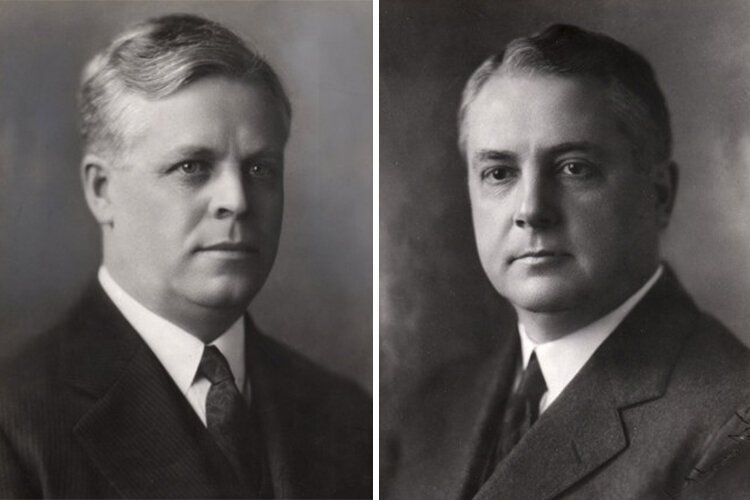
Ninety years after their deaths, much of the legacy of brothers Oris Paxton and Mantis James Van Sweringen remains obvious. The brothers are known in Cleveland history for their real estate developments, including Shaker Heights, Shaker Square, the Rapid Transit, and the Terminal Tower complex.
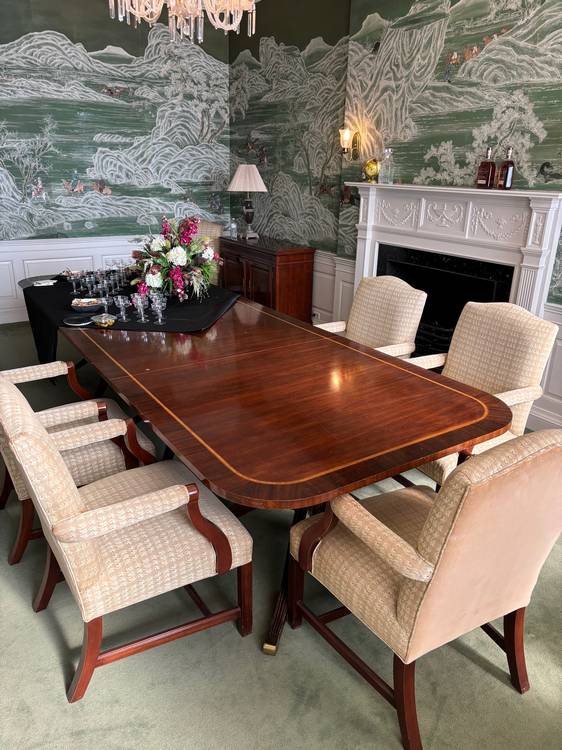
 The Greenbrier Suite Green Room, styled by designer Dorothy Draper, with painted wallpaper.
Shaker Heights, the Hotel Cleveland, and the Terminal Tower are impossible to miss. Far less well-known, however, is the Greenbrier Suite, which occupies several floors in the Terminal Tower.
The Greenbrier Suite Green Room, styled by designer Dorothy Draper, with painted wallpaper.
Shaker Heights, the Hotel Cleveland, and the Terminal Tower are impossible to miss. Far less well-known, however, is the Greenbrier Suite, which occupies several floors in the Terminal Tower.
Rarely seen by the public, the space was designed by renowned Cleveland architect Phillip Small and originally served as a downtown residence for the Van Sweringen brothers, who maintained their business offices on the Terminal Tower’s 36th floor.
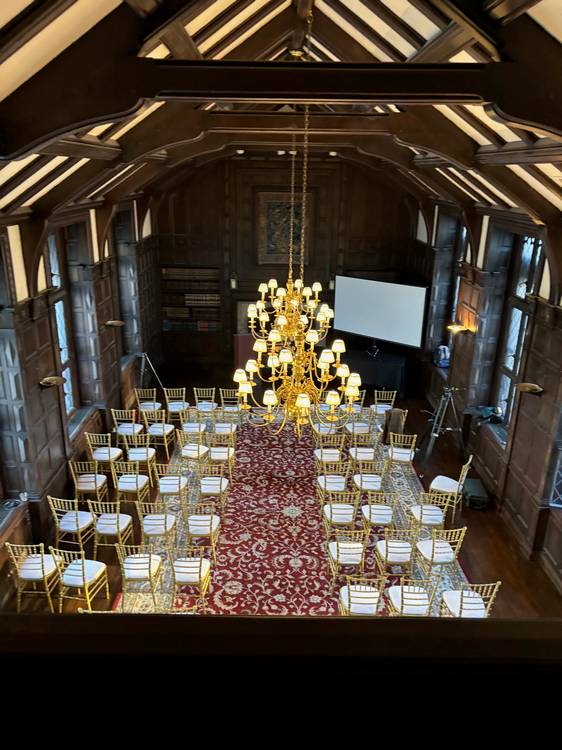
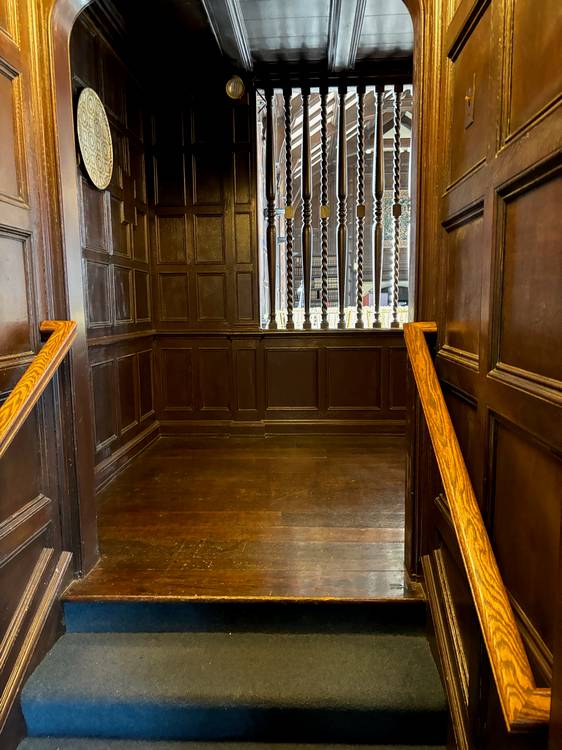
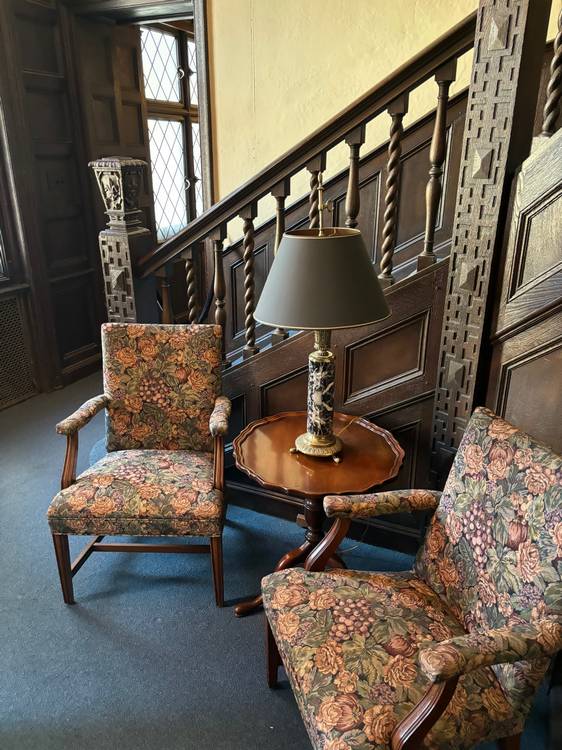
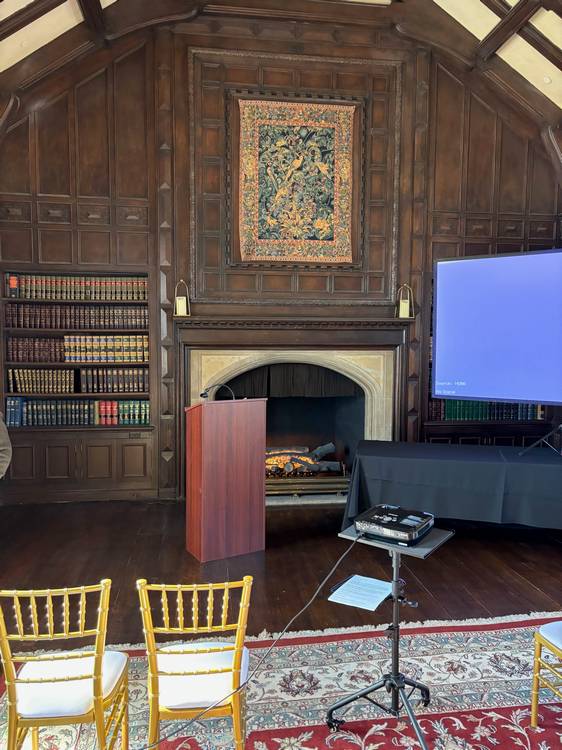
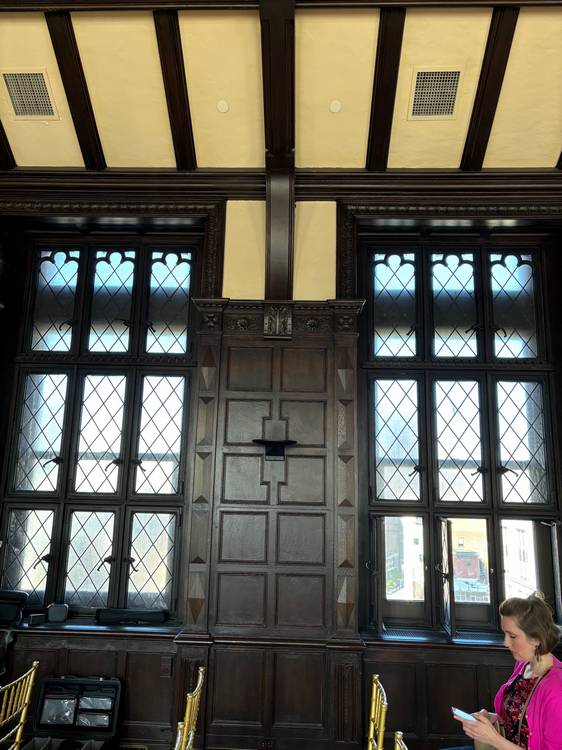
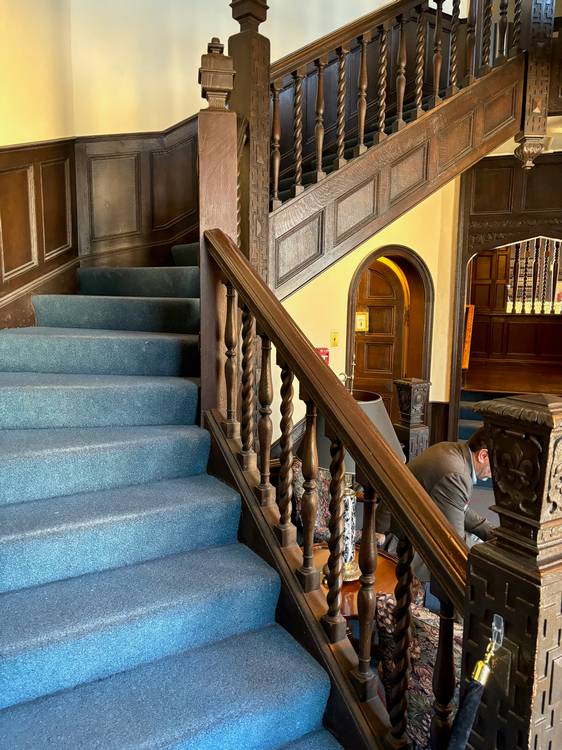
The Greenbrier Suite originally spanned the 12th through the 14th floor of the Terminal Tower—featuring Sherwood oak paneling, a vaulted-ceiling Great Hall, a boardroom, and a Green Room styled by Dorothy Draper with Chinese landscape wallpaper.
Owned today by the K & D Group, the property management and development firm opened this rarely seen space to a group of 70 Cleveland architecture history enthusiasts on the evening of Thursday, May 7.
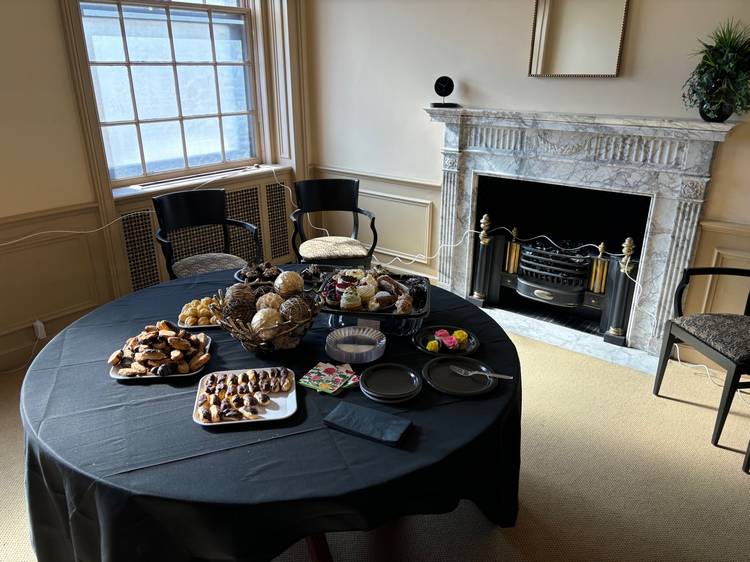
Upon arriving at the 12th floor, the visitors were greeted in a long entrance hall. They were then welcomed to explore the space during a social hour that enabled guests to closely examine the craftsmanship.
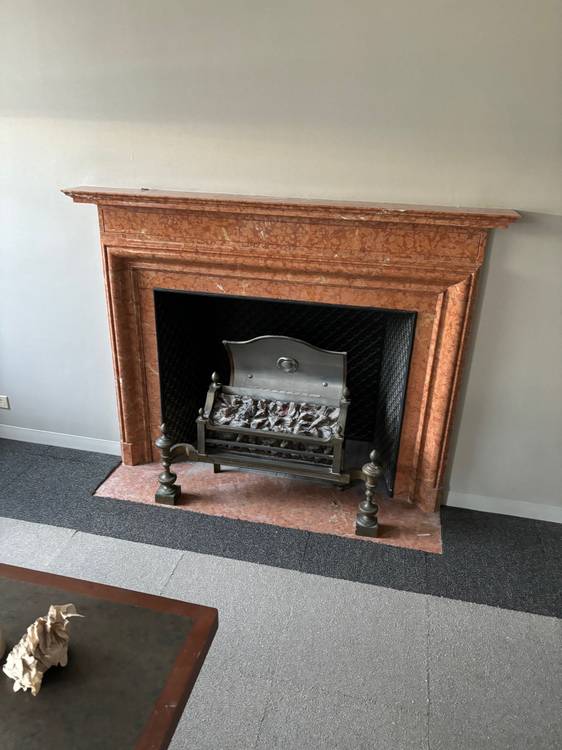
The Greenbrier Suite conveys the impression of a manor house in Hunting Valley. Replete with fireplaces, the space was beautifully executed in the Tudor style that was so popular in the 1920s.
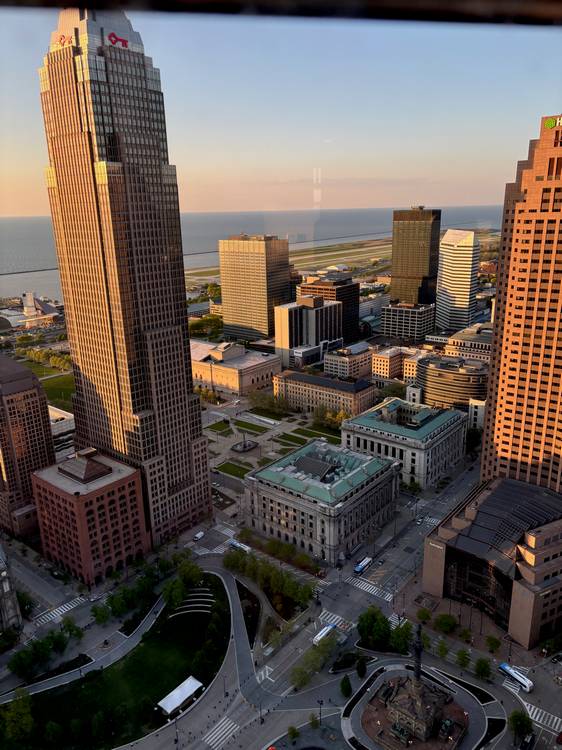
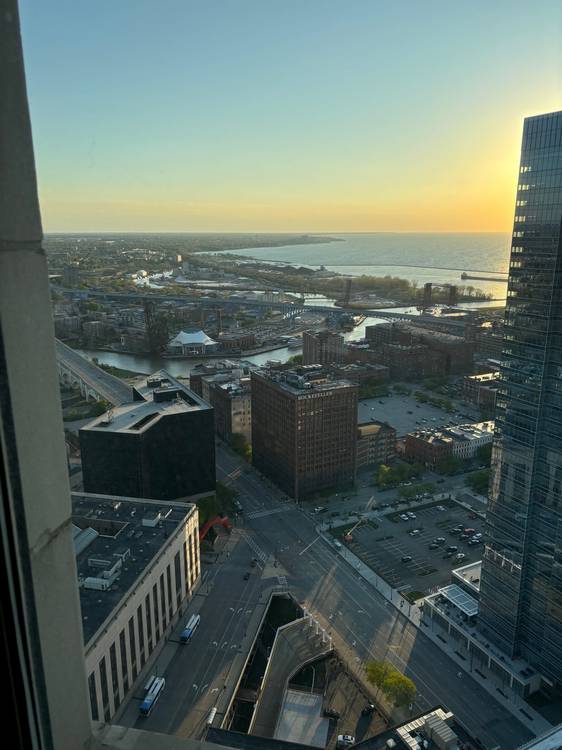
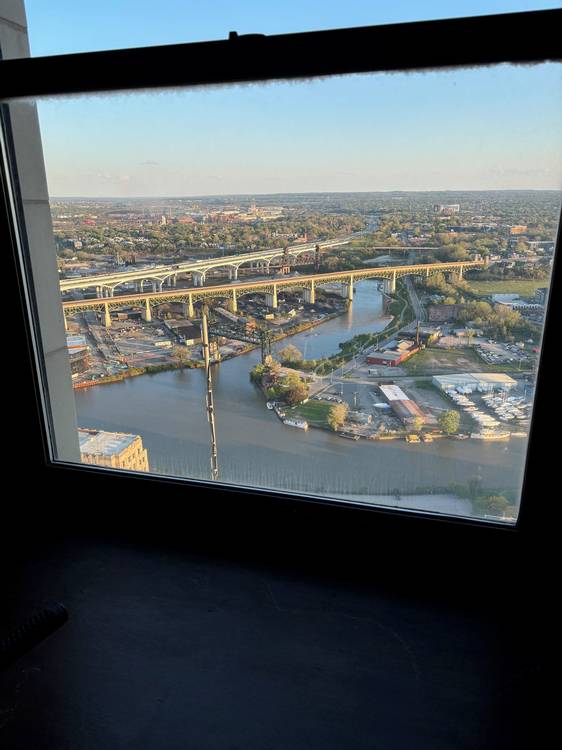
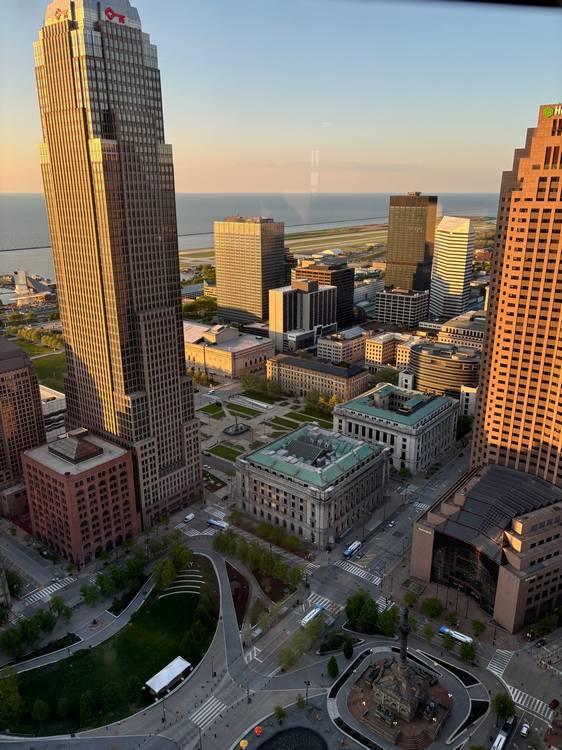
 A view of Cleveland from the Greenbrier Suite.It is jarring to look through a window and find oneself hovering twelve stories above Public Square instead of gazing across hundreds of yards of lawn.
Carefully maintained, the rooms are much as the Van Sweringens left them—although some spaces show signs of works-in-progress.
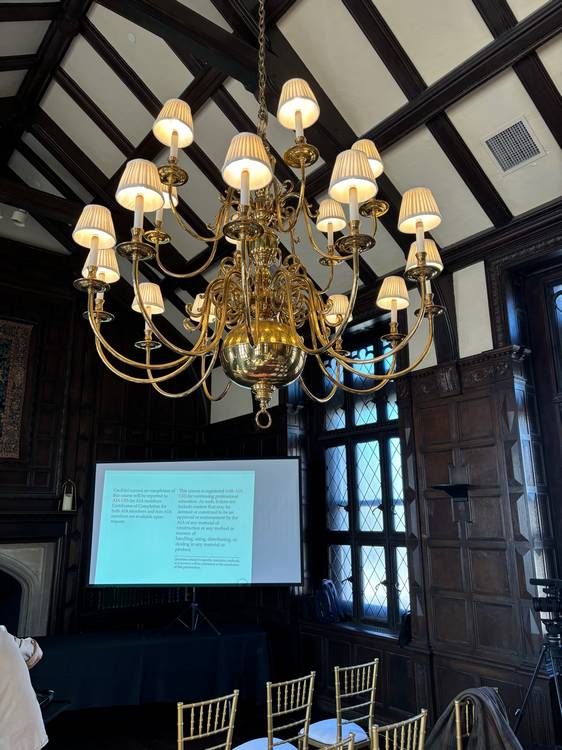
After the social hour, guests made their way to the Great Hall and listened to a presentation about Phillip Small. The speaker was Cleveland architect David Ellison—someone with significant experience working directly with surviving Van Sweringen properties.
The next phase of the event was an elevator ride to the 36th floor to walk through the paneled offices once occupied by the Van Sweringen brothers.
This large space appears relatively unchanged, although it was pointed out that later tenants glued carpeting to the marble floor in the lobby. The carpeting was removed, with considerable difficulty, to restore the area’s original appearance.
The visitors then took another elevator ride, this time to the observation deck on the 42nd floor, a space that provides a memorable 360-degree view of Cleveland.
All in all, it was a remarkable evening, and much credit is due to Greg Soltis, senior designer with RDL Architects, and Aaron Price, director of public relations with the K&D Group, for making it possible.
About the Author: Tom Matowitz
Recently retired after a 37-year career teaching public speaking, Tom Matowitz has had a lifelong interest in local and regional history. Working as a freelance author for the past 20 years he has written a number of books and articles about Cleveland’s past. He has a particular interest in the area’s rich architectural history.