
Hooked up: DigitalC hits major milestones in closing Cleveland’s digital divide
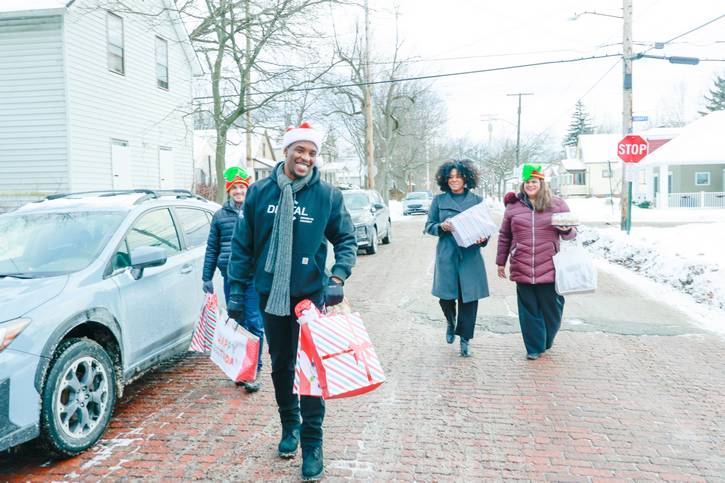
DigitalC, the local nonprofit that is focused on connecting the unconnected, last week announced it has marked several milestones in 2025, reflecting the rapid expansion of broadband access and digital skills training across Cleveland.
Since launching its citywide connectivity effort in January 2024, DigitalC delivered a next-generation network in under 18 months, has connected more than 7,500 households to its Canopy internet service, including 4,700 in 2025 alone, and brought high-speed home internet to more than 18,000 residents.
“We had clear goals for this year—to connect 4,700 households, build a citywide network in 18 months, and expand digital skills—and we delivered,” says DigitalC CEO Joshua Edmonds. “In less than two years, Cleveland now has a fully built network that is changing how families connect, learn, and thrive.”
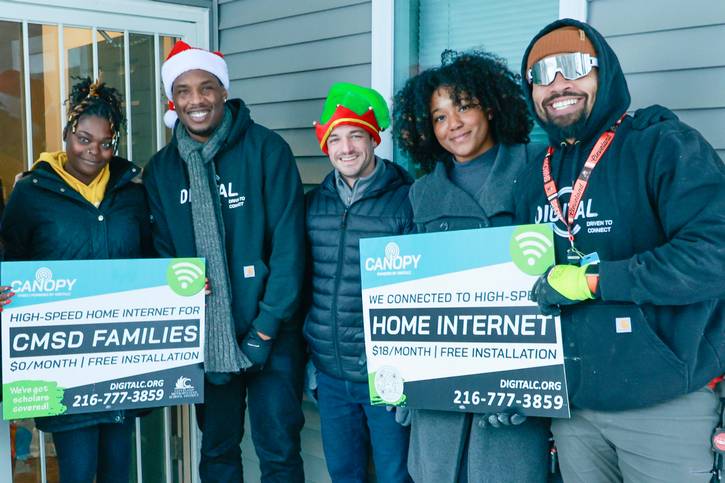
 (L to R) Canopy subscriber Cameo Scales, DigitalC CEO Joshua Edmonds, CTIconnect senior sales executive = Mike Vasil, government Affairs managerChenoa Miller, and field technician associate Tharon Eulinberg.In June 2025, DigitalC completed the full build-out of Cleveland’s next-generation network in under 18 months—recognized as being among the fastest community-based broadband deployments in the country. The effort has received local, national, and international recognition as “the Cleveland Model,” a community-based approach to broadband delivery designed to address affordability without compromising quality.
Digital skills training expanded alongside the network build. Since January 2024, DigitalC has trained more than 17,500 residents, including 10,000 in 2025, and facilitated over 20,000 digital-skills learning sessions through partnerships with schools, libraries, housing providers, and community organizations.
“Connectivity changes lives,” says Edmonds. “When families have reliable internet at home, it unlocks opportunity, stability, and choice—and that’s what this milestone represents.”
Local Canopy subscriber Cameo Scales agrees. “It actually makes me feel good to know that we have an internet company that truly cares about their customers,” he says. “My daughter loves to sing and dance and create, so having the internet works perfectly for us. She can do the things she needs to do.”
The work has been supported by a broad coalition of partners, including the Mandel Foundation, the David and Inez Myers Foundation, the State of Ohio, the City of Cleveland, Cleveland City Council, The Gund Foundation, Rocket Community Fund, Microsoft, and Google.
“In less than two years, Cleveland moved from one of the worst cities for connectivity to a fully built, citywide network—turning broadband into an engine for digital empowerment,” says Edmonds. “That progress was made possible through strong philanthropic, public, and private partnerships, and the access now supports work, learning, healthcare, and everyday online services that drive economic mobility.”
This year also marked the first expansion of DigitalC’s Cleveland Model beyond Ohio. In a partnership led by Rocket Community Fund, the City of Detroit, Detroit Housing Commission, and Merit Network, DigitalC completed a Detroit pilot project, connecting 450 families across three public housing communities and demonstrating the model’s ability to scale.