
The legend lives: Union Pacific Big Boy No. 4014 thunders through Northeast Ohio
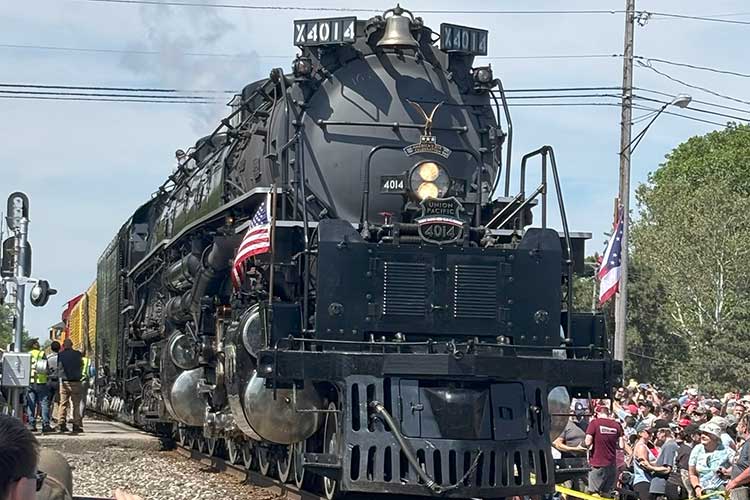


One of the most evocative sounds from America’s past is the wail of a steam locomotive’s whistle in the distance. On Monday, June 8, scores of sunburned Cleveland-area rail fans braved temperatures in the 90s to get a much closer experience.
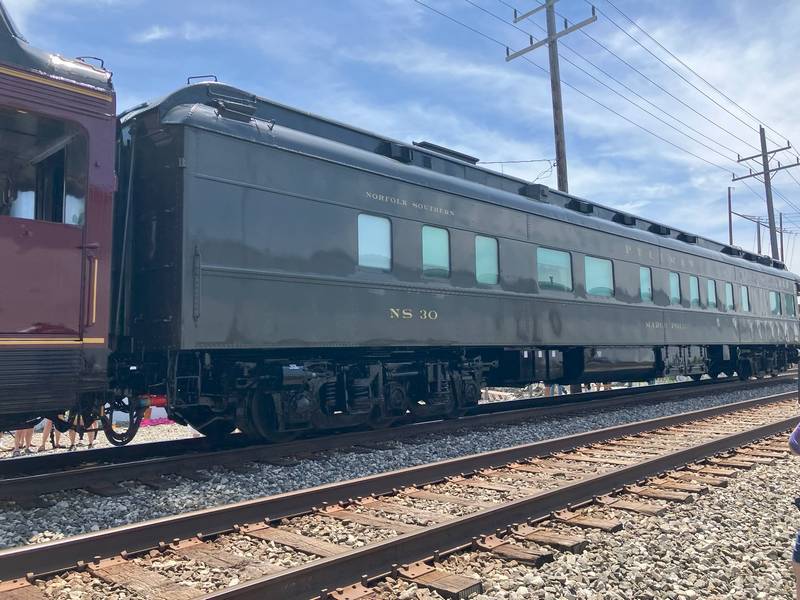
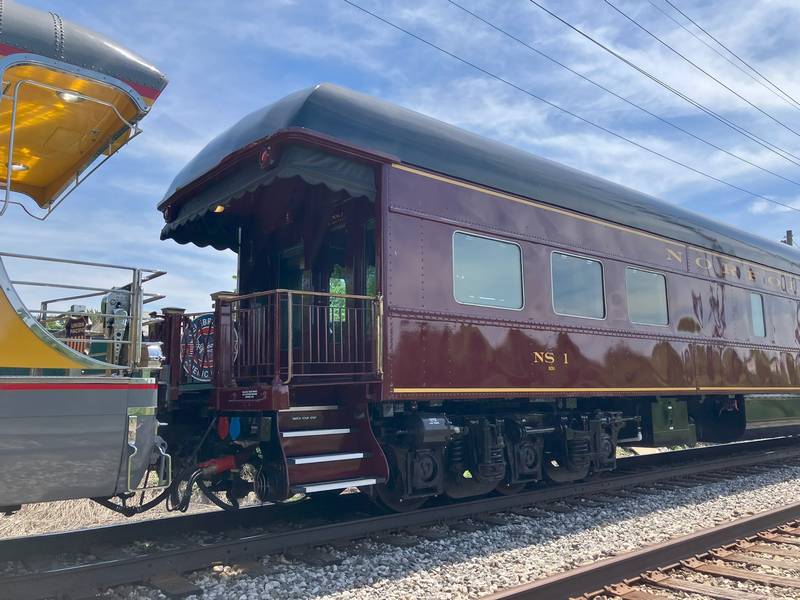 A vintage private car, operated by the Norfolk Southern Railroad, at the Euclid.What they heard was more a roar or bellow than a whistle as a restored Union Pacific Big Boy thundered past.
Designed to haul fast freight, the Big Boys were built in the early 1940s and are among the most technically advanced steam locomotives ever built.
They cost $268,000 apiece when they were new. This sum represents more than $6 million in today’s money.
It should be remembered that these intricate machines were designed by engineers armed with slide rules. They were backed by legions of skilled draftsmen who created the drawings that converted concepts into reality. The use of computers for such tasks was decades in the future.
The first batch of 18 locomotives was delivered in the autumn of 1941. They performed so well that seven more were ordered in 1944.
Originally, the locomotives were intended to be named the Wasatch class—honoring the Utah mountain range where they were scheduled to operate.
This naming choice was immediately dropped when a laborer in the Schenectady, New York, ALCo plant, where the locomotives were built, climbed up on a newly-completed steam engine with a piece of chalk.
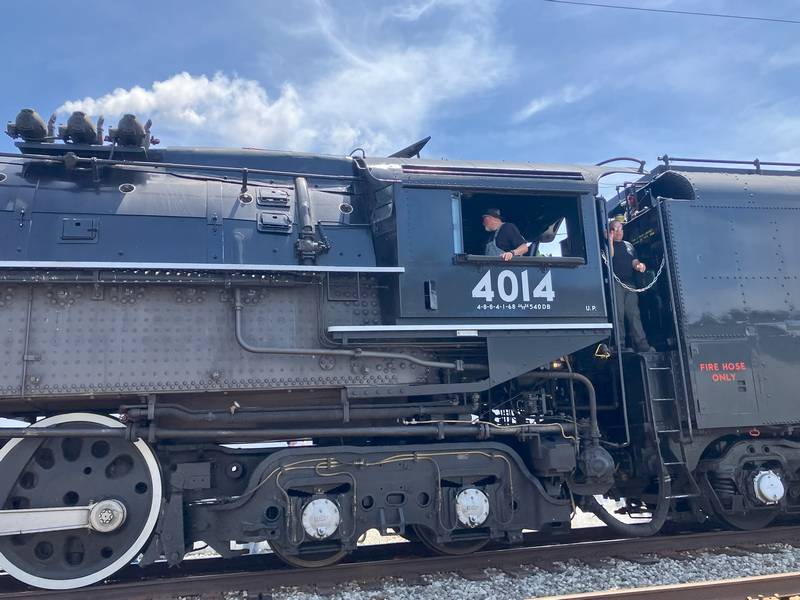
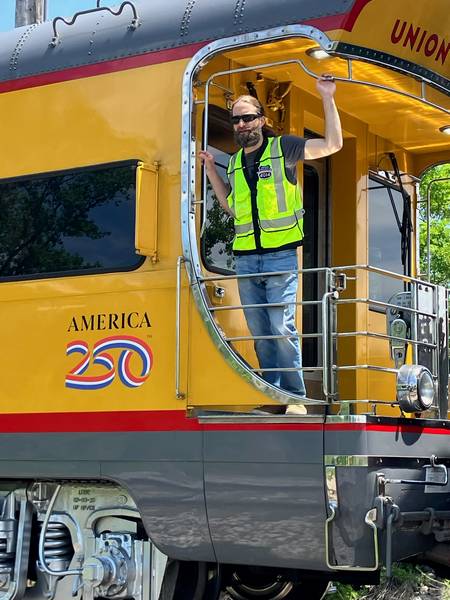
 A member of the train crew looks out at all the onlookers at the Euclid stop.He wrote the phrase “Big Boy” on the smoke box front—thereby creating an icon.
The Big Boys were popular with their crews. They were regarded as easily-managed and very reliable. They were huge. With an overall length of 132 feet and height of 16 feet, the name suited them perfectly.
They achieved an excellent safety record, with only one fatal accident in all the miles they logged.
A derailment in April 1953 cost the life of a Big Boy’s crew. But the derailment was due to a faulty switch—there was no reflection on the locomotive. This steam engine was repaired and returned to service. It still exists and its condition is such that it is a candidate for restoration.
After being dormant for 60 years, it is possible that two Big Boys will be active in the future.
Supplanted by diesels in the late 1950s, Union Pacific’s Big Boys made their final runs in revenue service in 1959, less than 20 years after their introduction.
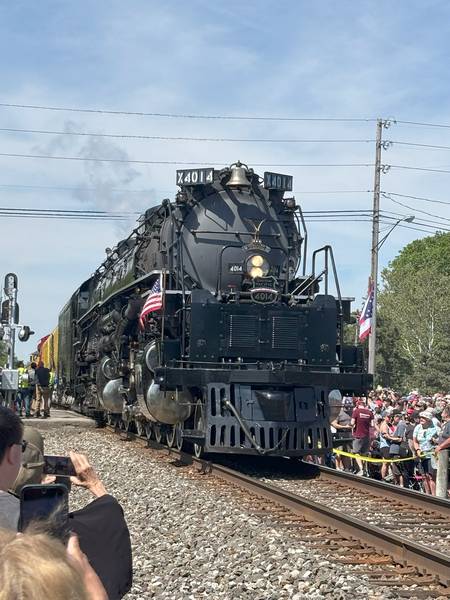 A look at Big Boy No. 4014 head-on in Grafton.Four examples were kept in operational condition as late as 1962. Thereafter, it was decided that their day was done. Seventeen Big Boys were scrapped, with the remaining examples consigned to static display in museums—cold and silent.
In 2019, Union Pacific made the remarkable decision to return one to service. An excellent example was retrieved from a museum in California, where it had been on static display for years. and placed in running condition.
For many years, Union Pacific has maintained an honorable tradition of refurbishing and operating key steam locomotive designs. The practice allowed modern audiences—many of whom were not yet born when these locomotives were new—to see them in their element.
The Big Boy is traveling to help celebrate America250. It will be passing through the area again on its way home in several weeks—stopping in Rocky River, 19060 Depot St., on Monday, July 13, from 1 p.m. to 1:30 p.m.
It is not to be missed.This writer waited a lifetime to see and hear a Union Pacific Big Boy in action.
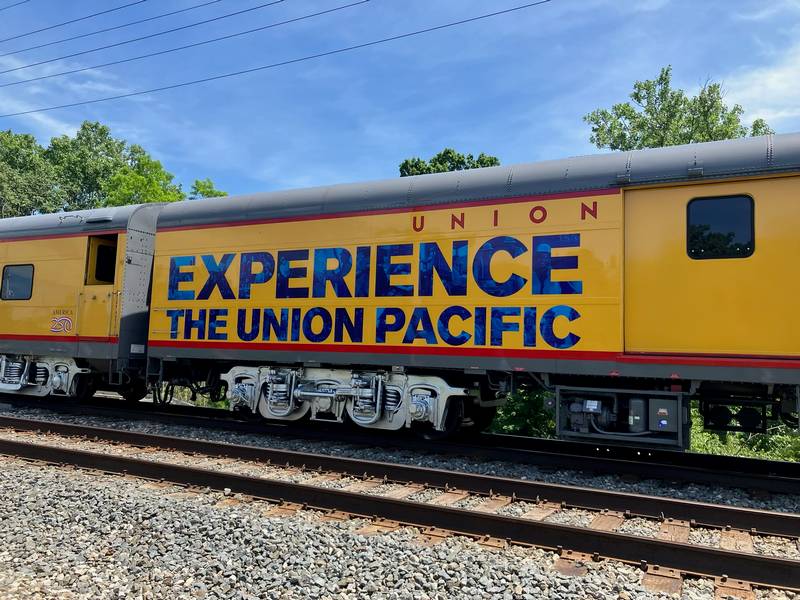
The large crowds gathered to see it agreed that it was worth the wait, loudly applauding as the locomotive passed by at the head of a long passenger train.
About the Author: Tom Matowitz
Recently retired after a 37-year career teaching public speaking, Tom Matowitz has had a lifelong interest in local and regional history. Working as a freelance author for the past 20 years he has written a number of books and articles about Cleveland’s past. He has a particular interest in the area’s rich architectural history.