Before the curtain rises: Cleveland Public Theatre’s The Dark Room helps playwrights shape new plays


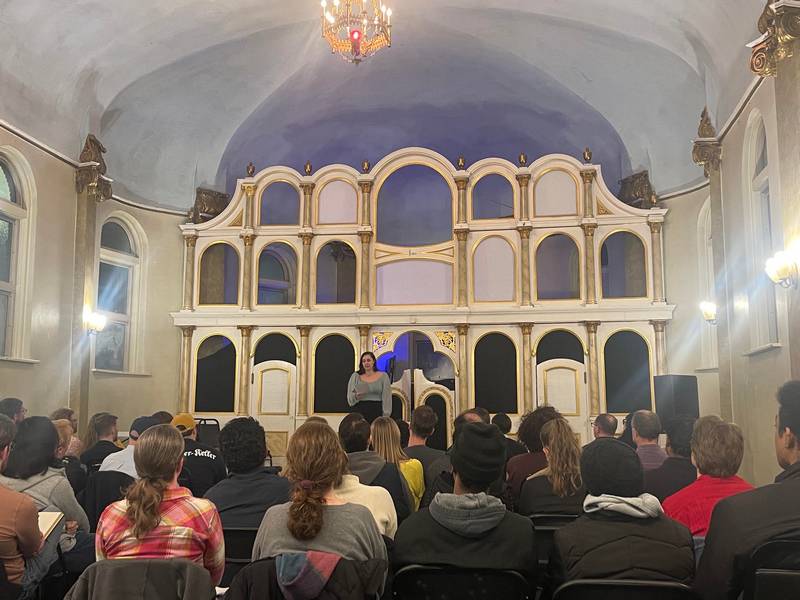
Most theater audiences attend live theater performances expecting to see fully polished productions.
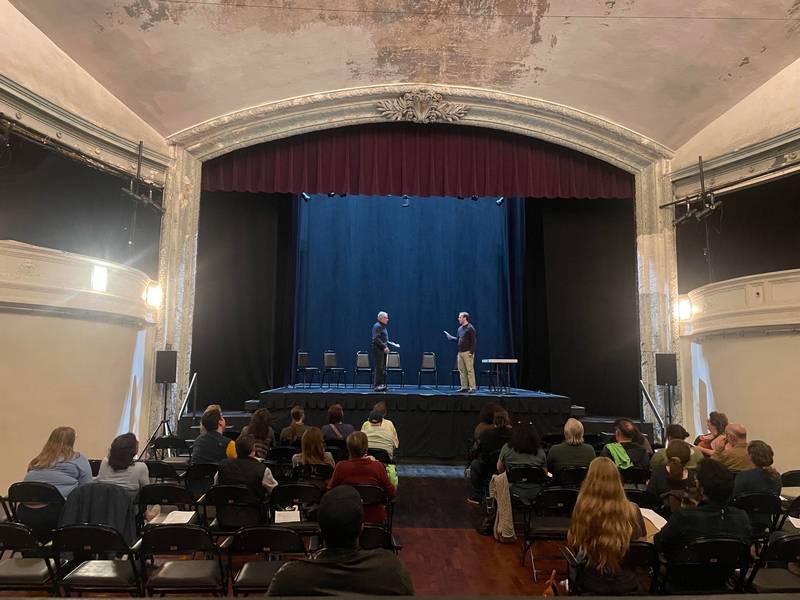
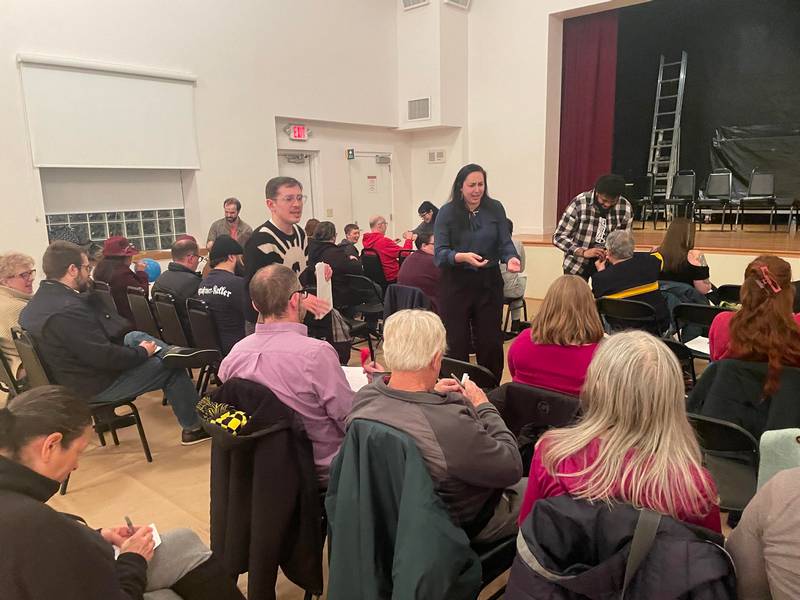
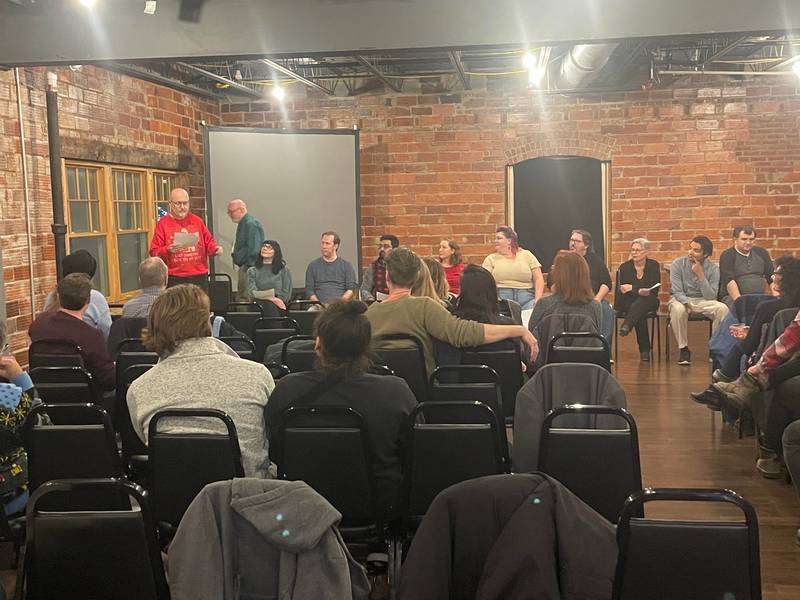 A cabaret during The Dark Room session.At The Dark Room, audiences gather at Cleveland Public Theatre (CPT) to experience something far less finished—but just as important: a chance for writers to workshop plays, poems, screenplays, and other written works in a supportive yet critical environment.
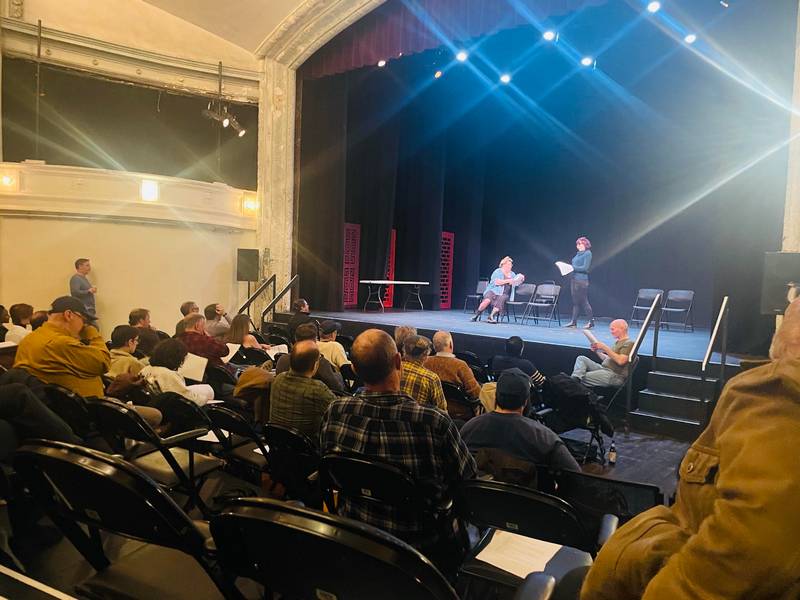
Held on the second Tuesday of each month, except for September, The Dark Room gives playwrights the opportunity to hear up to 10 pages or 10 minutes of their unfinished scripts read aloud by volunteer actors before a live audience.
The monthly program invites feedback from fellow artists and theatergoers alike—creating a collaborative space where new ideas can be tested, refined, and, in some cases, become the foundation for future productions.
Actors gather around scripts they've never read before. Playwrights wait as their words prepare to leave the page for the first time.
Within minutes, strangers become castmates, audience members become collaborators, and works-in-progress begin their next stages of development.
10 minutes or 10 pages
For nearly two decades, CPT’s Mindy Herman has helped guide that process as coordinator of The Dark Room. She says the monthly program gives playwrights the rare opportunity to hear their unfinished work performed aloud in front of a live audience.
"The Dark Room is essentially an open mic for playwrights and actors," Herman says. "It's a chance for playwrights to hear up to 10 minutes or 10 pages of a work-in-progress read by volunteer actors in front of an audience."
Unlike a traditional theatrical production, there are no auditions for playwrights or actors. Scripts are selected at random, and volunteer actors are cast moments before the readings begin.
"There are no barriers to entry," Herman explains. "People who have never written a play before can bring something, and actors who have never been here before can jump in and read."
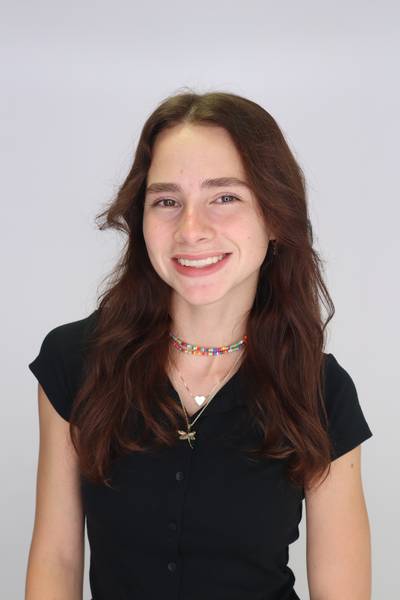
 Actor and writer Samantha Cocco at The Dark Room session.For playwrights, hearing their words spoken aloud often reveals things impossible to notice while writing alone.
"You can't continue to develop a script without hearing it out loud," Herman says. "When you're writing by yourself, you only hear the voices in your head. Once an actor performs it, you discover what works, what doesn't and what you want to change."
The Dark Room is one part of CPT’s broader New Play Development initiative, which supports artists through every stage of the creative process—from early script readings and workshops to, in some cases, full productions.
While the program gives playwrights a place to develop new work, many participants say its greatest strength lies in the community it creates.
Finding community through creativity
That collaborative environment is exactly what attracted Cleveland playwright Greg Mandryk to CPT more than a decade ago.
Mandryk, who has attended The Dark Room for roughly 15 years, first discovered the program after The Dark Room co-host John Busser encouraged him to bring a collection of comedy sketches.
“I said, ‘These are sketches, they're not plays,’” Mandryk recalls. “John said, ‘Bring them anyway.’”
The experience ultimately changed the direction of Mandryk’s creative career.
Before attending The Dark Room, he performed stand-up comedy. But unlike comedy clubs, where audiences often interrupt performances or talk amongst themselves, Mandryk found something different at Cleveland Public Theatre.
"I love the fact that people actually listen to what you're trying to say," he says.
Today, one of the biggest reasons Mandryk says he returns to The Dark Room isn't just to share new work—it's having a monthly deadline to create it.
"A lot of writers really need a deadline," he observes. "Without that fire under my butt, I don't think I'd write anything."
 A reading at The Dark Room.Longtime participant David L. Munnell says the accessibility is what first drew him to The Dark Room.
Munnell first attended The Dark Room after moving to Cleveland in 2015 and looking to get involved in the local theater community. He says it was exactly what he was looking for.
“I think it's a really good opportunity for community building,” Munnell says. “There's a low barrier of entry. People who have never written a script are more than welcome to bring something.”
For experienced writers like Munnell, the opportunity to hear talented actors perform unfinished work provides valuable insight before revisions begin.
“We have a lot of talent in Cleveland,” he says. “You get good actors up there with your script—working on your material. And then you can take that home and rewrite it."
Sometimes, he says, simply listening to the audience is enough.
“If it's a joke that I feel should land, and they're not laughing, obviously I did something wrong," Munnell says.
Over the years, Munnell has seen his work move beyond The Dark Room. One play first read during a Dark Room session later received a staged reading in Brooklyn, New York.
Building new plays
While participants see The Dark Room as a welcoming, creative space, Cleveland Public Theatre officials view it as an important first step in developing new work.
For CPT executive artistic director and CEO Raymond Bobgan, stories like Munnell's demonstrate why programs like The Dark Room remain central to the organization’s mission.
"Our work is research and development," Bobgan explains. “About 95% to 98% of our productions are world premieres."
More than Open Mic
Although The Dark Room program has helped playwrights earn national recognition—including nods to great productions across the country, an Obie Award, and even film adaptations—coordinator Herman says she believes The Dark Room's greatest success isn't measured by awards or productions.
"Playwriting is a solitary activity," she notes. "You spend so much time by yourself writing."
 A group gathers dAuring a Dark Room session.The Dark Room changes that solitude.
“It's a community of artists, and it's always looking for new members,” she says.
The sense of community has kept playwrights like Mandryk and Munnell returning to The Dark Room for more than a decade—not only to develop their own work, but also to encourage fellow artists who are finding their voices.
The Dark Room is held on the second Tuesday of each month, except for September, at Cleveland Public Theatre, 6415 Detroit Ave., Cleveland 44102.
Admission to the sessions is free and open to playwrights, actors, and audience members interested in experiencing and supporting new works in development.
The next session of The Dark Room is on Tuesday, Aug. 11, with writer signups from 6:45 p.m. to 7 p.m. and readings starting at 7:30 p.m. The session is free and open to the public.