Boris Lurie’s haunting art confronts the Holocaust in Maltz Museum exhibit
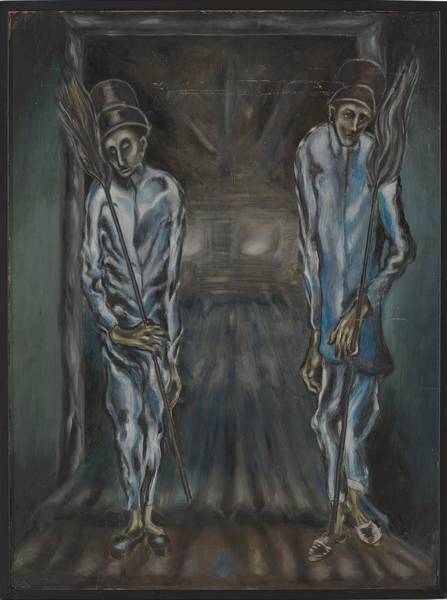
Holocaust survivor and artist Boris Lurie turned to painting and drawing to confront the horrors he witnessed as a teenager in Nazi-occupied Latvia, including the murder of his mother, grandmother, sister, and girlfriend.
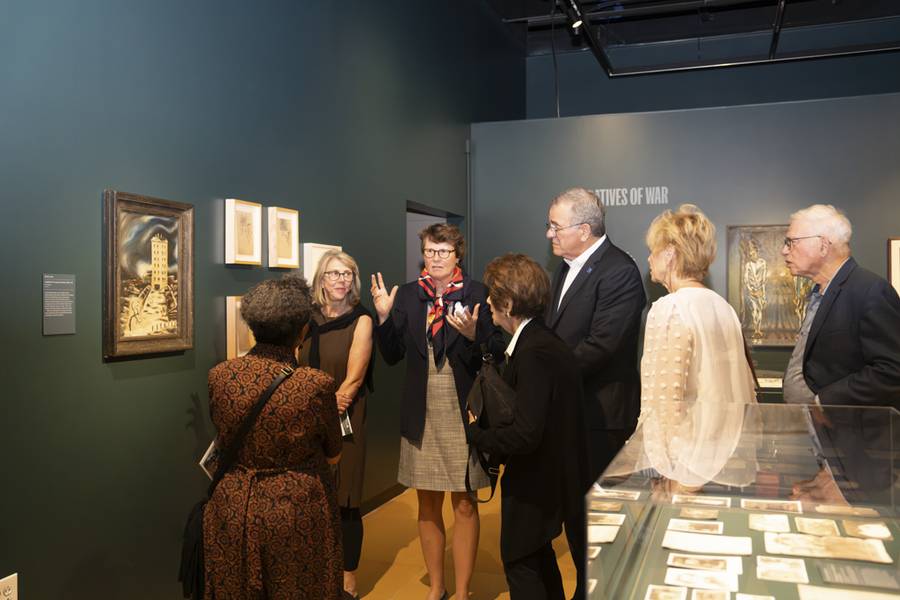
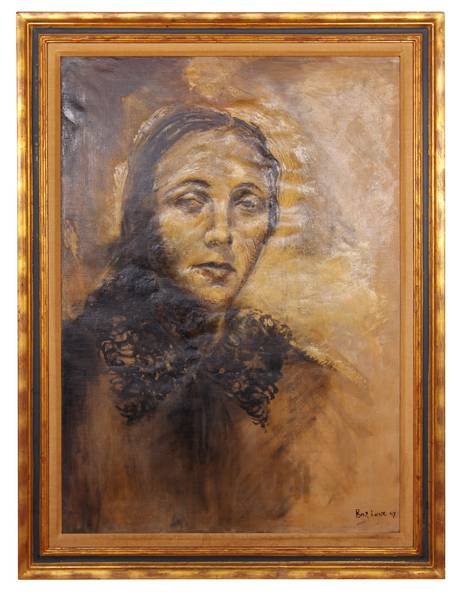
 'My Mother Before Shooting.'More than 200 works and archival objects at the Maltz Museum in Beachwood include deeply personal paintings and drawings Lurie created shortly after arriving in the United States in 1946, many of which remained unseen by the public during his lifetime. “Boris Lurie: Nothing To Do But To Try,” which opened Sunday, Oct. 18, explores the life and work of the man who became an influential avant-garde artist in New York.
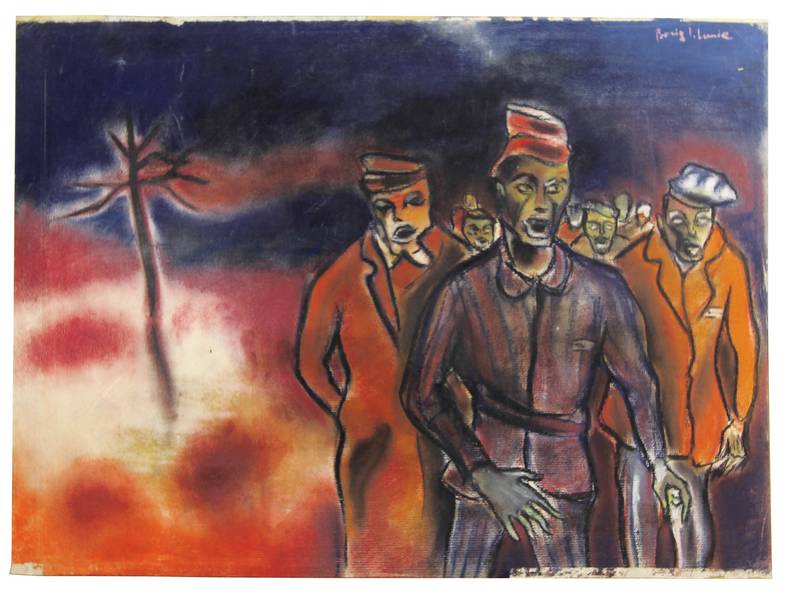
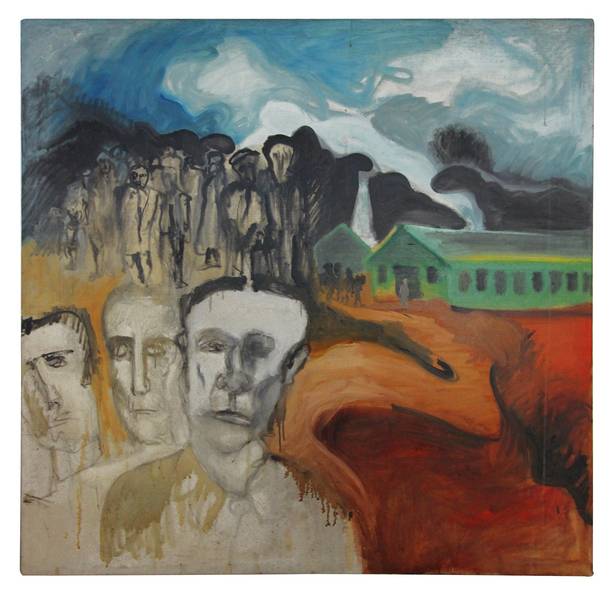
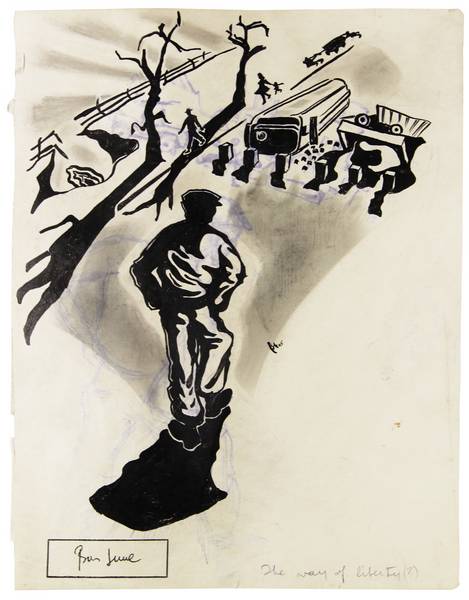
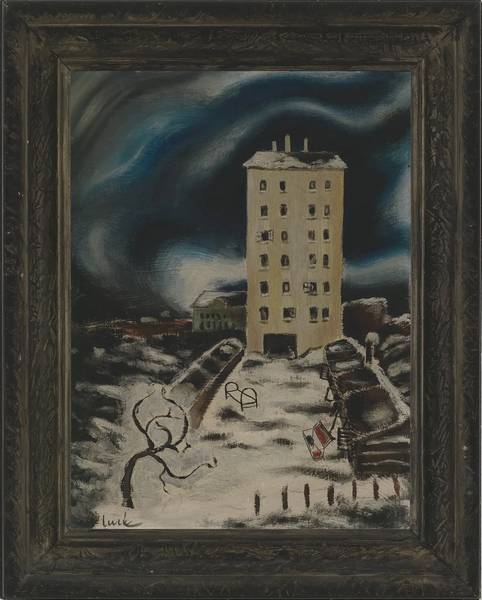
The figures are distorted, the landscapes unsettled, and the scenes disturbing. In Lurie’s early paintings and drawings, barbed wire, concentration camp barracks, and shadowy figures emerge from an intensely personal visual language shaped by his experiences during the Holocaust.
The exhibit brings together these private paintings and drawings with family photographs, correspondence, and other archival materials that illuminate Lurie’s personal history, the loss of his family, and his determination to preserve the memory of the Holocaust.
“Many of the works really have not been publicly seen before,” says Stephanie Siebich, executive director of the Boris Lurie Art Foundation in Clifton, N.J. “These were private works, created beginning in the year after he had arrived in America.”
The exhibit is organized by the Museum of Jewish Heritage, a living memorial to the Holocaust in New York City, in partnership with the Boris Lurie Art Foundation, and is presented in Cleveland by the Maltz Museum.
Exhibit highlights include:
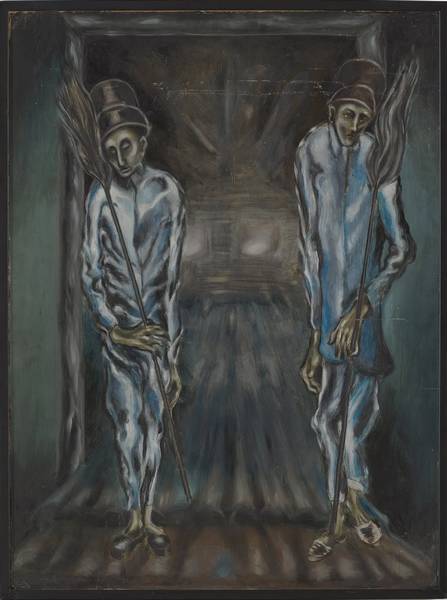 'Russian Prisoners.'Lurie’s War Series: Almost 100 paintings and drawings created primarily in 1946, as Lurie grappled with his wartime experiences. The works depict concentration camp scenes, forced labor, barbed-wire landscapes, distorted figures, nightmares, and portraits. He did not exhibit the deeply personal series during his lifetime.
- “Roll Call in Concentration Camp” (1946): A work drawing on Lurie’s memories of imprisonment and the daily realities of camp life. Other drawings depict forced factory labor, encounters with guards, and camp-wide alerts.
- Original photographs of Lurie and his family in prewar Riga: Images he managed to keep throughout the war, some still visibly creased from having apparently been carried folded in a pocket.
- Personal archival materials: Diaries, correspondence, photographs, and documents that reveal Lurie’s lifelong efforts to preserve Holocaust history and confront his own memories.
Born in Leningrad in 1924, Lurie grew up in Riga, Latvia. He was 16 when Nazi forces occupied the city in 1941. His family was forced into the Riga ghetto, and his mother, grandmother, sister, and girlfriend were among the tens of thousands of Jews murdered in mass executions at Rumbula Forest.
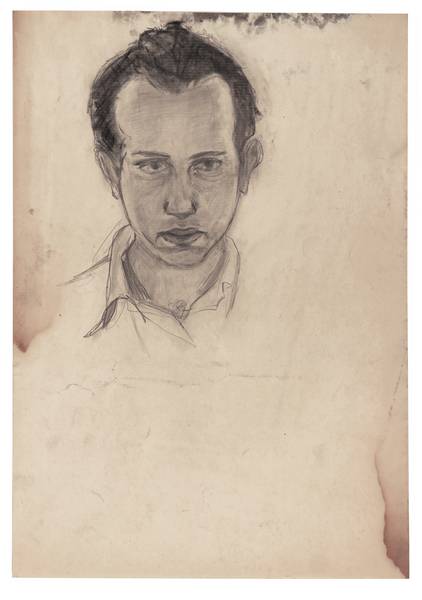
 Boris Lurie self Portrait.
Lurie and his father survived forced labor and concentration camps before immigrating to the United States in 1946. The following year, Lurie began making drawings, sketches, and paintings that gave visual form to his experiences, depicting imprisonment, roll calls, barbed-wire landscapes, distorted figures, and nightmares.
Working in pencil, pen and ink, oil on canvas and board, and monoprints, Lurie experimented with different techniques to express his memories. Some works are small, quickly rendered sketches, while others are more developed paintings. Despite having little formal art training, he demonstrated a wide range of artistic expression.
Sara Softness, the exhibit’s originating curator and director of curatorial affairs at the Museum of Jewish Heritage, says Lurie’s work often conveys an emotional state rather than attempting to recreate the physical world as it appeared. The compositions can feel groundless, she says, with figures that seem to dissolve or emerge from shadow. Splotches, drips, and expressionist marks contribute to the sense of disorientation, offering glimpses of memories that remain difficult to reconcile.
One drawing depicts roll call in a concentration camp, which Softness describes as “the most horrible daily occurrence” in Lurie’s recollections. Other works suggest nightmares and distorted visions, reflecting the psychological weight of surviving the camps.
In one particularly revealing 1947 painting, “Portrait of My Mother Before Shooting,” Lurie portrays his mother in a work he kept private throughout his life. The intimate image differs from the artistic styles he explored later. “These are very personal works that Boris is doing before he really commits himself completely to going to the Art Students League,” Siebich says, referring to his later studies in New York.
Lurie eventually became known for avant-garde works that combined images from popular culture, advertising, and the Holocaust. He also co-founded the NO!art movement, which challenged the commercialism and perceived superficiality of the art world. His early paintings and drawings offer a different perspective on that career, revealing the experiences that continued to inform his artistic choices. Siebich recalls that Lurie once remarked, “I would have liked to have made pretty pictures, but something always stopped me.”
 'The Way of Liberty.'Preserving memories
The exhibit combines Lurie’s artwork with family photographs, diaries, correspondence, identification cards, and other archival materials that offer insight into his life and creative process. Some of the most moving objects are photographs of his family in prewar Riga. After surviving the liquidation of the Riga ghetto, Lurie secretly returned to his family’s apartment to retrieve photographs, preserving images of the people whose lives had been destroyed.
The archive also includes Lurie’s early journals, writings, and records of his imprisonment and travels. Together, these materials show an artist who carefully documented his own history and continued to reflect on it through writing and art.
The exhibit’s title comes from Lurie’s autobiography. Describing his early frustration with learning to paint without formal training, he wrote that there was “nothing to do but to try.” Curator Softness says the phrase carries meaning beyond the act of making art, speaking to Lurie’s determination to continue creating despite the trauma that shaped his life. She sees the combination of Lurie’s artwork, personal writings, and archival objects as creating an unusually intimate portrait of a Holocaust survivor.
“The artwork is chilling, it’s tender, it’s many things,” she says. “So it’s really powerful visual testimony.”
 The 'Boris Lurie: Nothing to Do but to Try' exhibit runs through Jan. 27.A lasting legacy
In 1975, Lurie returned to Riga, revisiting the places where he had grown up and where his family had been murdered. The trip prompted extensive reflection and helped shape his autobiography. At the Rumbula massacre site, Lurie was troubled by the lack of meaningful recognition of the Jewish victims. The memorial marker referred to “victims of fascism” without fully explaining the history of the massacre. Lurie went on to spend years advocating for better memorialization, determined that the victims and their stories not be forgotten.
His experience also points to a less familiar aspect of Holocaust history: the mass shootings carried out by Nazi forces and their collaborators in occupied Soviet territories. Softness says an estimated 1 million to 1.5 million Jews were murdered in these shootings, sometimes called the “Holocaust by Bullets,” often before the establishment of the extermination camps.
Lurie continued to experiment with artistic styles and materials throughout his life, returning to the memories that shaped him. The Maltz Museum exhibit places his early work in historical context with additional images and films. Siebich says the paintings and drawings reveal a critical chapter in the artist’s development, helping explain the relationship between his personal experiences and his later artistic choices.
“He wasn’t a Holocaust artist,” she says, “but the Holocaust kind of ran through him.”
“Boris Lurie: Nothing To Do But To Try” offers visitors an opportunity to experience a period in history through Lurie’s own creative expression. His paintings and drawings document what happened while illustrating the lasting emotional consequences of survival and his determination to confront the past.
“Boris Lurie: Nothing To Do But To Try” runs through Jan. 27, 2027, at the Maltz Museum, 2929 Richmond Road, Beachwood, 44122. For more information, visit the Maltz Museum website or call (216) 593-0575.