Breaking down barriers: Smithsonian brings ‘The Bias Inside Us’ to Maltz Museum

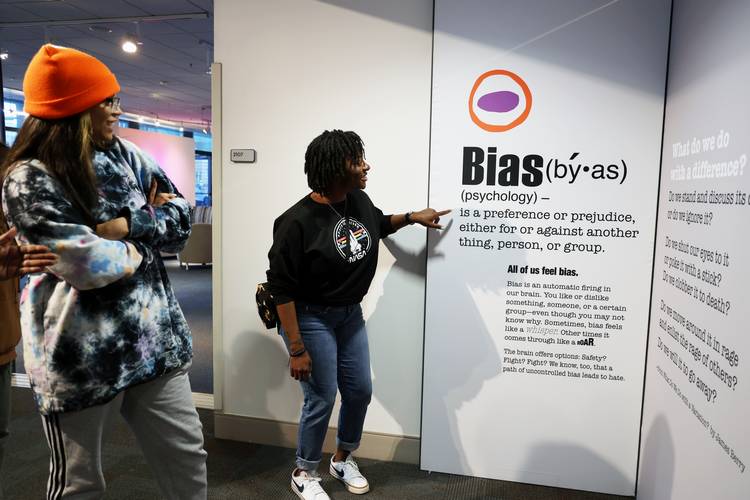
The Maltz Museum of Jewish Heritage and Diversity Center of Northeast Ohio are partnering to host a groundbreaking Smithsonian Institution Traveling Exhibition that will challenge visitors' perceptions about unconscious bias and spark meaningful conversations when "The Bias Inside Us" opens at the Maltz Museum this Sunday, March 8.
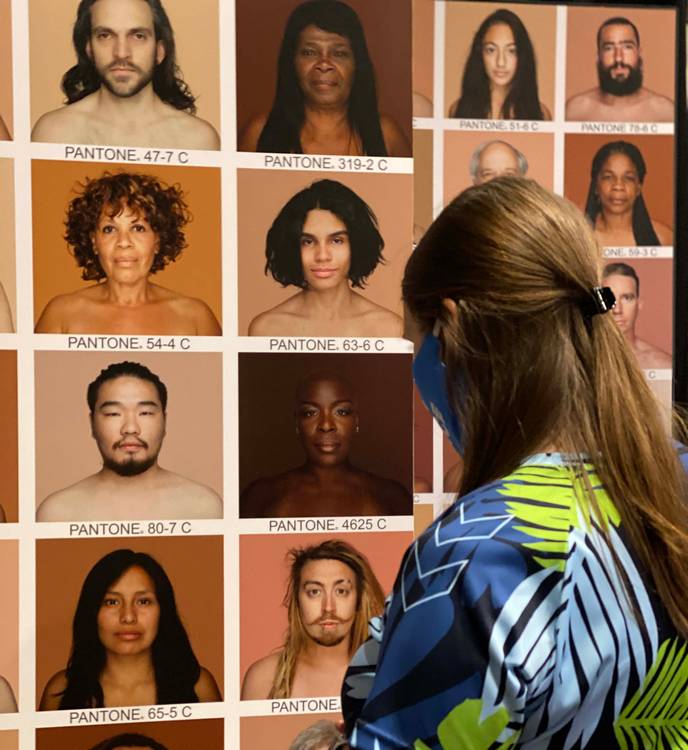
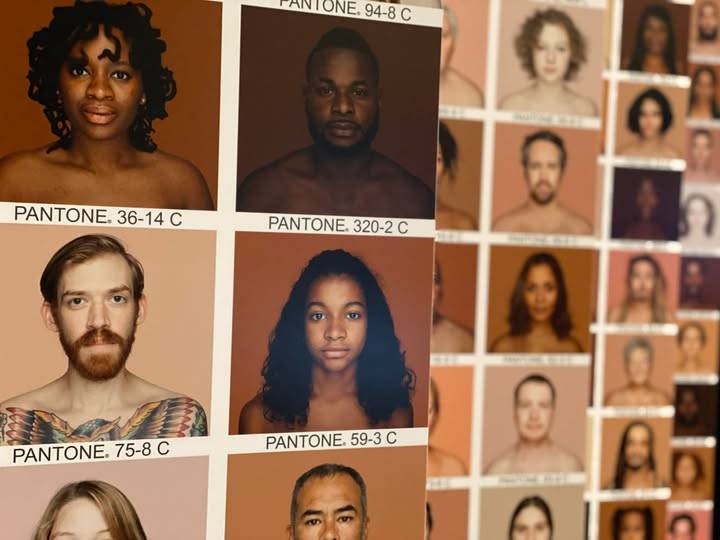
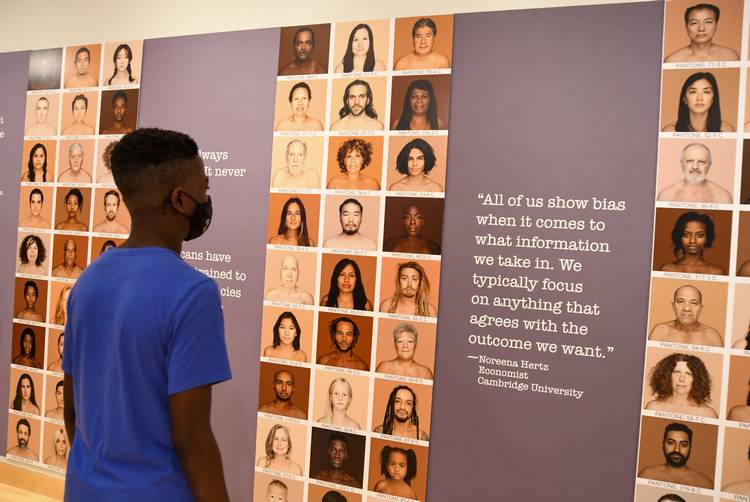
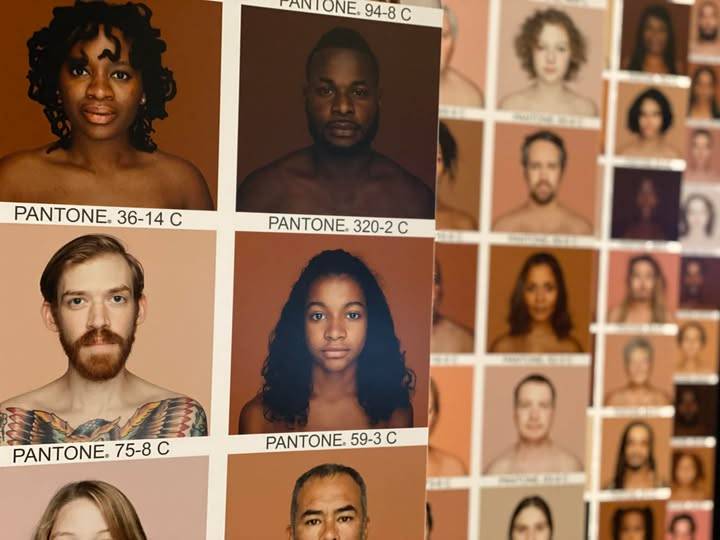
 The Humanæ project by Brazilian artist Angélica Dass shows portraits of people whose skin tone is matched to a Pantone color card to challenge concepts of race.The month-long exhibit, running through Sunday, April 5, invites Northeast Ohio residents to engage with innovative research on implicit bias, reflect on their own biases and how those prejudices may impact their actions, and learn about how our brains create shortcuts that can lead to unconscious prejudices.
“‘The Bias Inside Us’ is a traveling exhibition and community engagement project that's really aimed at raising awareness about the social science and the psychology of implicit bias—how it is produced in our brain and then the impacts it has on our behaviors and thus the world around us,” explains Liz Novak, Maltz Museum director of learning and interpretation.
The exhibition’s opening comes at a time when the country grapples with issues of equity and inclusion, says Diversity Center president and CEO Mark Swaim-Fox, who is also partner on educational programming and creating safe spaces for honest self-reflection in the exhibit.
"You're not human if that's the case," says Swaim-Fox on the notions of partiality—emphasizing the universal nature of bias, even in people who claim to be free of prejudice. "We like to say at the Diversity center, ‘we're not about blame and shame. We're about confronting ourselves.’"
Interactive learning
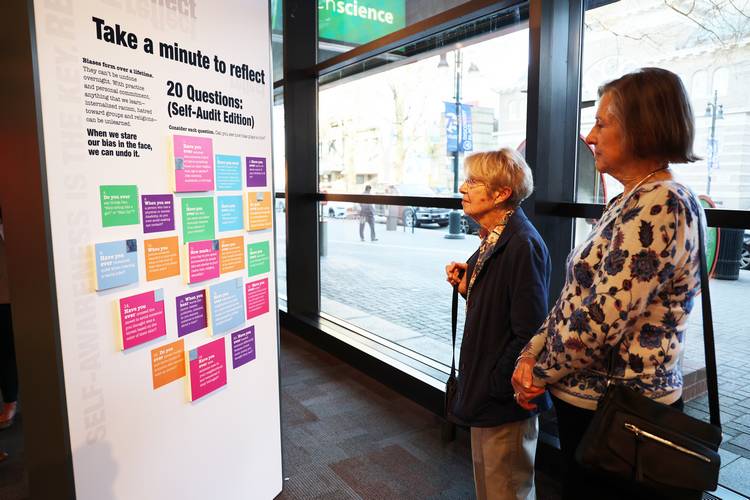
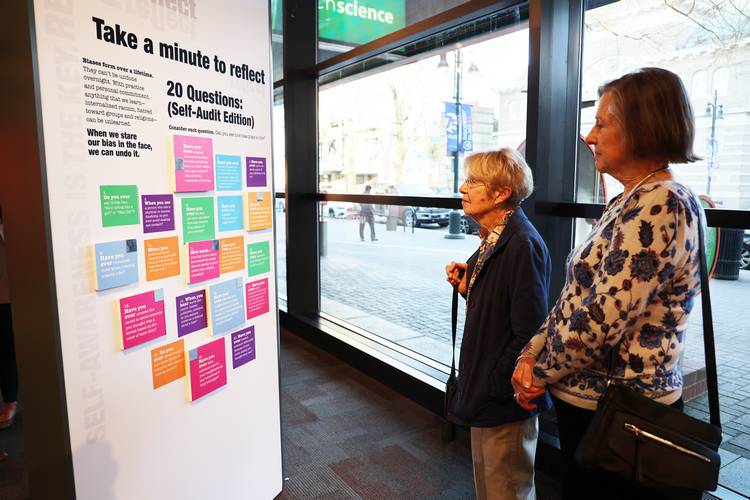
The exhibition features six distinct sections that guide visitors through the science of bias formation, its real-world impacts, and strategies for positive change.
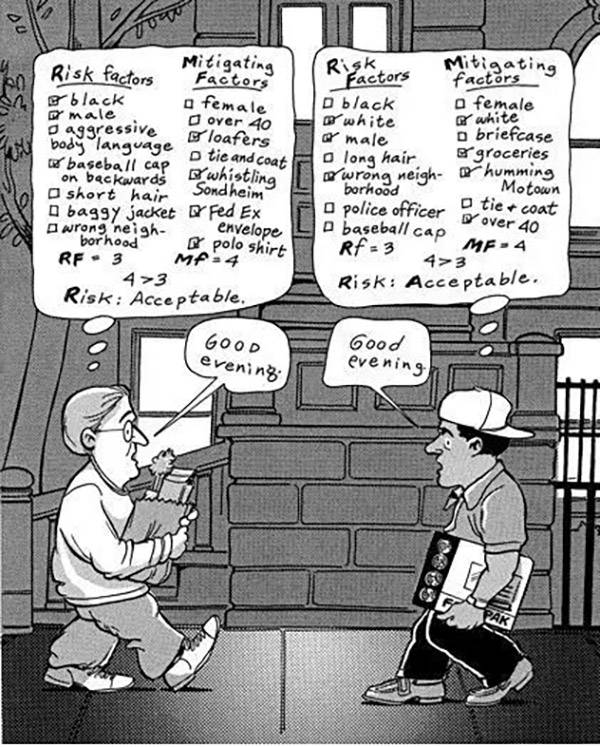
 Garry Trudeau’s cartoon from the Doonesbury comic strip comments on the calculations we make about one another."All of the sections of the exhibition are very interactive,” says Novak. “They use imagery, some have poetry. They use interactives of videos that really encourage visitors to engage with the science.”
Swaim-Fox points to satirist Gary Trudeau, and his specific “Doonesbury” comic strip called "Street Calculus" as a great teaching tool about human reactions to bias and prejudice.
"These two men, one Black, one white, are walking down the street and they each have a thought bubble,” Swaim-Fox explains. “The cartoon reveals the internal calculations both men make to avoid making each other feel threatened—illustrating how unconscious bias affects everyone's daily interactions.”
Novak highlights “The Bias Inside Us” exhibit’s scientific foundation, particularly "the Science of Bias" program. "It literally looks at how our brain relies on shortcuts to help us make sense of our environment,” she says. “And these shortcuts are generally quick assumptions that help us act and behave and keep ourselves safe. It uses a lot of visual aids, like shapes and perspective, to show you that what you always see isn't always the truth."
Educational partnerships
The Maltz Museum and the Diversity Center will also offer two training sessions this month.
The first one is for educators on Monday, March 9—designed to help the participants explore the exhibition, anticipate student engagement, and gain practical tools for facilitating thoughtful conversations in their classrooms. The cost is $15.
The second one is for students on Thursday, March 19 and offers an interactive field trip experience where students explore the exhibition, share perspectives, and connect big ideas about the everyday impact of implicit bias.
Students will collaborate on a creative project that connects the exhibition themes to real-world and local experiences. Cost for individual students is $5; class registrations are available by emailing Lucy Wedding, museum interpretation administrator.
Novak says Shaker Heights City Schools has already committed to bringing about 25 students and 12 to 15 teachers to the workshops.
"We have about 25 students registered right now, all within one district, but different pieces of that district," she says, adding that Cleveland Municipal School District and other area schools are also considering participation.
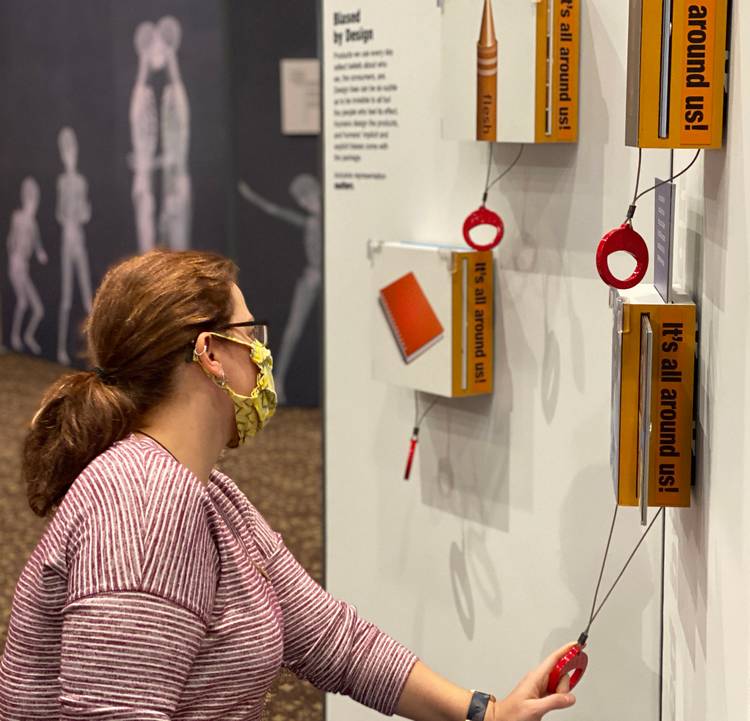
 Interactive elements display how bias is reflected in product design, advertising, architecture and technology.Timely relevance
The exhibit comes during a period of heightened awareness about diversity, equity, and inclusion (DEI) issues. Both Swaim-Fox and Novak say they have noticed increased interest in DEI training at the Diversity Center and the Maltz Museum as communities seek constructive ways to address these topics.
"We've spent the last eight or so months really trying to bring down the noise, to try to speak about what diversity, equity, inclusion and belonging actually is," says Swaim-Fox. "We've definitely seen an impact, and people are starting to figure this out. We’ve started to get more contracts with schools, with companies."
Novak echoes the same sentiment, noting how the museum has become "a very safe space for people to engage in these topics, to hear human stories, to think about agency, and to think about positive community, really on their own terms."
A rare opportunity
The Smithsonian Institution Traveling Exhibition Service first launched "The Bias Inside Us” traveling exhibit in January 2021 and has been bringing it to 40 communities across the United States.
Beachwood in the second-to-last stop on the tour before the exhibit travels to its last stop in Detroit on April 18 and closes on July 12.
Novak says it typically takes about an hour to experience the entire exhibit, though visitors can spend up to two hours engaging with the interactive elements.
For those looking for a more intimate experience, the Diversity Center will host a fundraising event on Wednesday, March 11 with guided tours and educational programming.
With a 100-person capacity, and about 70 people are already registered, Novak says tickets are selling quickly. Tickets are $85 and include drinks, appetizers, and guided exhibit tours led by Novak.
The Maltz Museum is located at 2929 Richmond Road, Beachwood, 44122, and hours are Tuesday through Sunday, 11 a.m. to 5 p.m., with extended hours on Wednesdays, 11 a.m. to 9 p.m. The museum is closed on Mondays.
"The Bias Inside Us" exhibit is included with regular museum admission, which is free for Maltz Museum membersS and children aged four and under; $12 for adults; $10 for seniors aged 60 and older and for students ages 12 and older; and $5 for children aged five to 11.