Community voices: Indigenous perspectives shape narrative of Art Museum's 'still/emerging'
For thousands of years, many Indigenous nations have occupied, navigated, cared for, and celebrated the land and waterways in Northeast Ohio.
In 2022, Cleveland Museum of Art (CMA) acknowledged the Indigenous peoples who have been dispossessed from this region with the Indigenous Peoples and Land Acknowledgment.
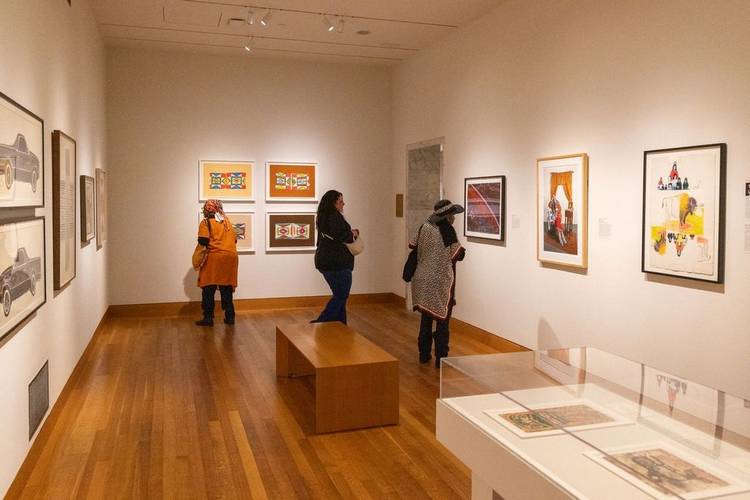
In February, CMA launched its first exhibition to highlight the museum’s collection of prints and drawings by Native American artists with "still/emerging: Native American Works on Paper."
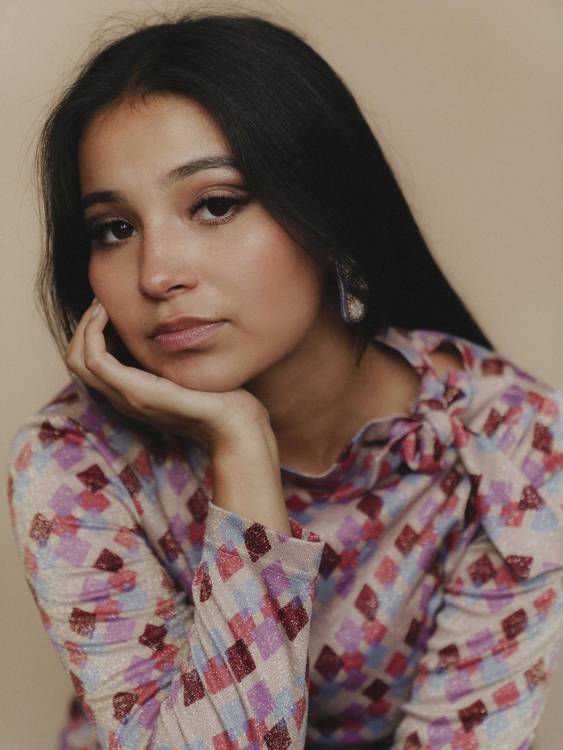
 Navajo poet Kinsale Drake.The title of this show comes from a poem on Indigenous survivance by Navajo poet Kinsale Drake and references the fact that the CMA land acknowledgment serves “not as an end but rather as the beginning” of an ongoing collaboration with our Native community members.
The objects in “still/emerging,” on view through Sunday, June 7, highlight how Native artists have used printmaking and drawing techniques in innovative ways to express and sustain their cultural heritage.
Featuring about 30 works created from the 1950s through today, “still/emerging” showcases the distinct histories and perspectives of Indigenous artists representing a range of backgrounds and tribal affiliations.
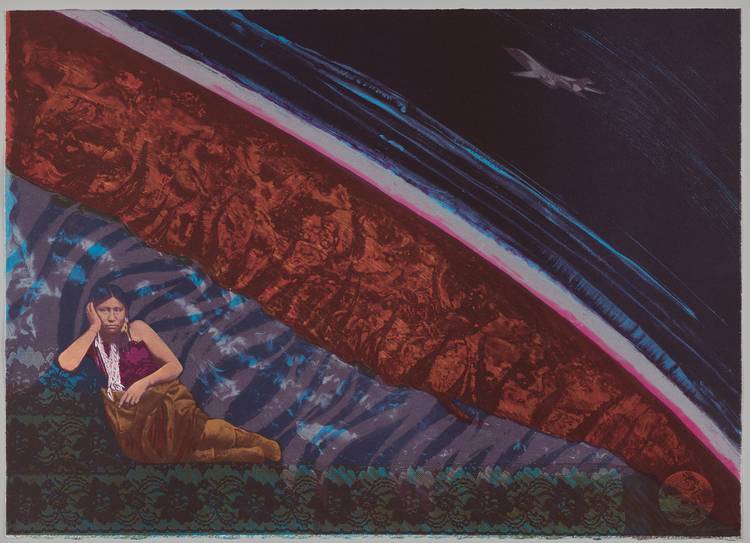
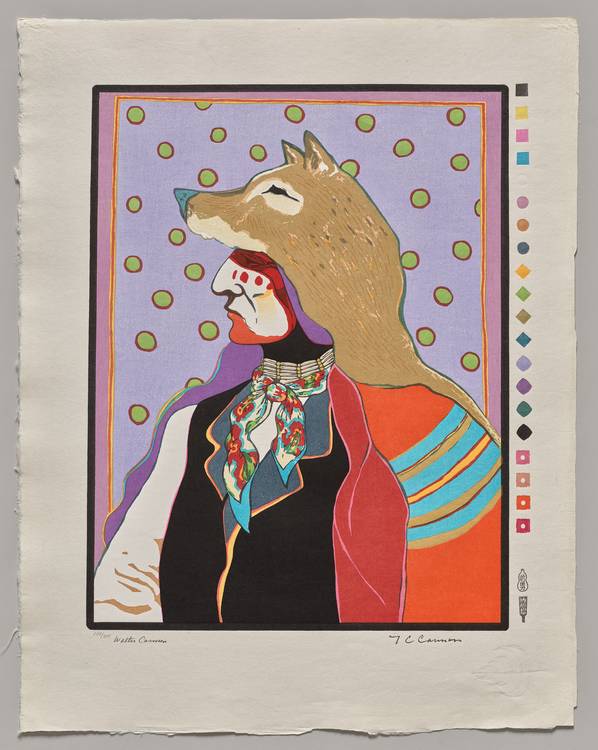
The works range from a series of woodcut portraits by T. C. Cannon (Kiowa-Caddo, 1946–1978) to a set of deeply symbolic color lithographs by Jaune Quick-to-See Smith (citizen of the Confederated Salish and Kootenai Nation, 1940–2025).
Multimedia artists include Wendy Red Star (Apsáalooke/Crow, b. 1981), Kay WalkingStick (American, member of the Cherokee Nation /Oklahoma, b. 1935), Nicholas Galanin (Tlingít/Unangax̂, b. 1979), Edgar Heap of Birds (Cheyenne and Arapaho Nations, b. 1954), and Rose B. Simpson (Santa Clara Pueblo, b. 1983), among others.
Together, these works shed new light on the importance of the graphic arts within their contemporary practices.
Amplifying voices
The exhibit takes a unique approach to museum interpretation that puts community voices at the center of the conversation.
Stephanie Foster, CMA senior manager, interpretation, has woven Indigenous community perspectives directly into the visitor experience through the museum’s Community Voice Labels—interpretive text panels created by community members who incorporate their personal perspectives, lived experiences, and interpretations into the descriptions of a work.
The labels, which appear with the artwork, offer additional insights—reflecting diverse viewpoints and meaning beyond conventional descriptions.
"If you think about the last time you were at a museum and reading a label, you might remember learning some facts about the artwork—maybe some information about the artist or what the object is made of or its narrative,” explains Foster, who oversees the Community Voice Labels program. “That label, a traditional museum label, was probably written by someone who is an expert in art history.”
The community voice labels represent a shift in how museums engage with their visitors, she says.
"The historical perspective is really important to the visitor experience, but it's also really important to empower our visitors to understand that there is more than one way to look at a work of art," Foster says, adding that the Community Voice Labels usually are about 130-word narrative quotes from a museum partner and include a headshot. Foster also notes that the quotes are not necessarily historical in nature.
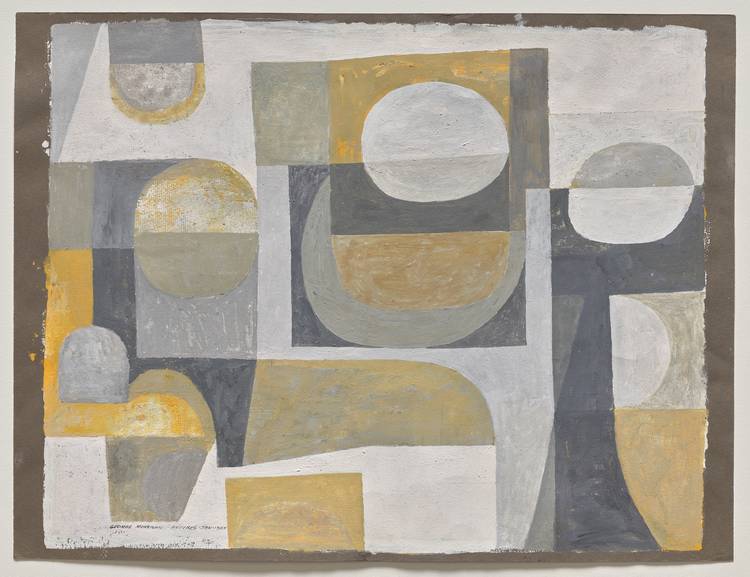
 Structural Forms,A personal process
Foster collaborated with four Indigenous community members for the "still/emerging" exhibit. The group worked closely with curators Nadiah Rivera Fellah and Britany Salsbury.
Foster describes the community voice labels creation process as deliberately personal and accessible.
"Once a community member agrees to participate, we do an interview,” Foster explains of the process, which is done virtually and recorded and transcribed for accuracy to create the Community Voice Label.
The collaborative nature extends beyond the initial interview, however.
"It always goes back to [the community member] to make sure that it reflects the conversation, that it reflects what they would like to express to our visitors,” Foster explains.
The relationship also extends beyond the museum walls and into the local community.
Cleveland connections
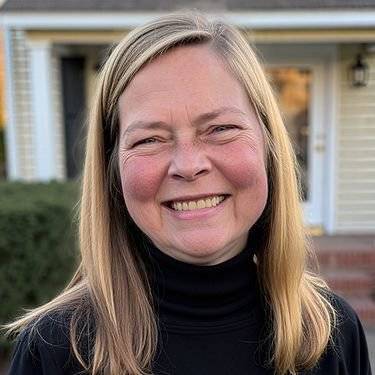
One of the most powerful aspects of the program is how it connects global art to local communities. Among the Indigenous voices featured is Nancy Kelsey of the Lake Erie Native American Council (LENAC), a columnist for cleveland.com, and a Cleveland Public Theatre board member.
Foster says local connections are critical to the success of the voice labels. "We found from evaluation that a lot of our visitors are really interested in Cleveland stories, learning about Cleveland, and connections to the city,” she observes. “This is a really great way to take artwork that might be distant in place and time but give it a connection to a Cleveland community.”
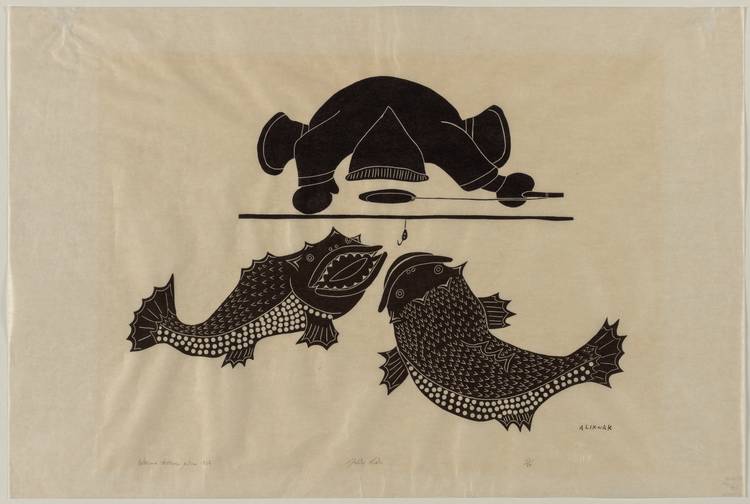
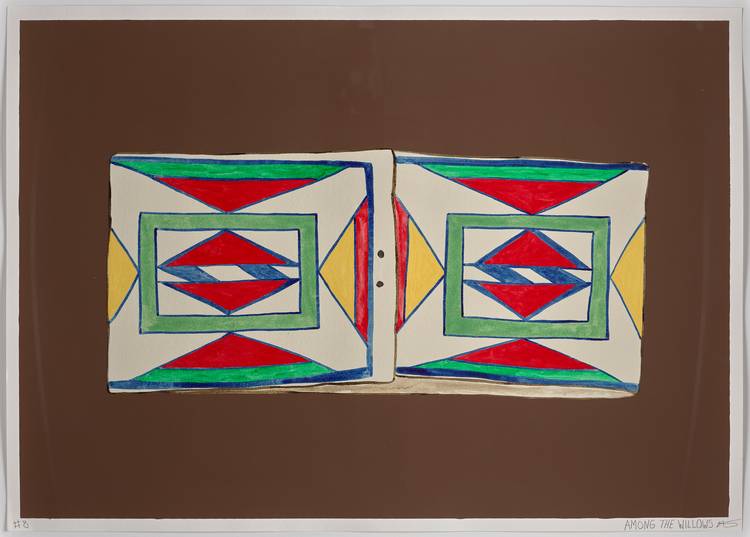
 Devil Fish by Alec (Peter) Aliknak Banksland.Foster says she has even benefitted from hearing different perspectives and interpretations of the art at the CMA.
"Sometimes in my work, I look at art every day, all the time—and I love talking to someone who can give me a different perspective on something, who can say, ‘oh, I noticed this little thing in this artwork,’" she explains. "I often walk away from those interviews thinking, ‘wow, I never noticed that before,’ or ‘I never thought about it in that way before.’"
Foster says she sees visitors who bring their whole selves to the museum, bringing their lived experiences that get rolled into their interpretations of the works.
“Their lived experience could be good, they could be bad, they could be somewhere in the middle,” she explains. “But all of those things really inform their visit and how they're looking at things.”
A growing program
The Community Voice Labels initiative launched with its first exhibit in 2021, "Picturing Motherhood Now."
Foster says that first try was a success.
"After that exhibition, we got some good feedback from visitors who really appreciated seeing the perspectives of mothers, or people who have chosen not to be mothers, in the exhibition,” she recalls. “So we decided to keep going with the program.”
Community Voice Labels has since expanded to include many exhibitions and permanent collection projects.
It’s not just community members offering their interpretations, says Foster, but CMA staff members have also participated. There are now plans for new labels as part of the museum's America 250 campaign.
"In a couple months when people visit the museum, they'll be able to see staff voice labels from 10 of our staff members related to the America 250 project,” promises Foster. “I'm always so happy to highlight the voices of staff who may not [otherwise] get the opportunity to share their perspective.”
 His Hair Flows like a River, from Memorial Woodcut Suite.Built to last
Foster says it’s important to recognize the Community Voice Labels program creates ongoing relationships between the museum and community members.
"I always hope that these partners come away from these projects knowing that they can and will see themselves reflected on the walls of the museum,” she says. “And that is really important for everyone who walks in the door.”
Foster says the program is particularly important in an exhibit like "still/emerging.”
"It's really important to have these voices in an exhibition like this that have that lived experience and those identities,” she says. “It was my priority to have these partners participate in the exhibition, and I'm so glad they did.”
Additionally, Foster says the Voice Labels in “still/emerging” illustrate the Cleveland Museum of Art’s commitment to expanding its collection and storytelling.
"We hope that it demonstrates our commitment at CMA to strengthen our holdings in this [Indigenous Peoples and Land Acknowledgment] collection,” she says, “and our commitment to telling a range of stories.”
“still/emerging: Native American Works on Paper” is on view through Sunday, June 7 in CMA’s James and Hanna Bartlett Prints and Drawings Galleries. The exhibit is free and no ticket is required.