One Art One Community: Exhibit illustrates the transformative power of art among the incarcerated

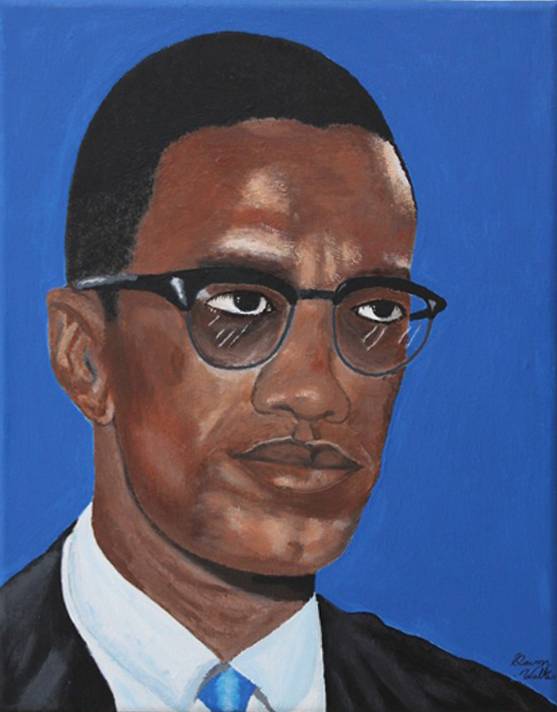
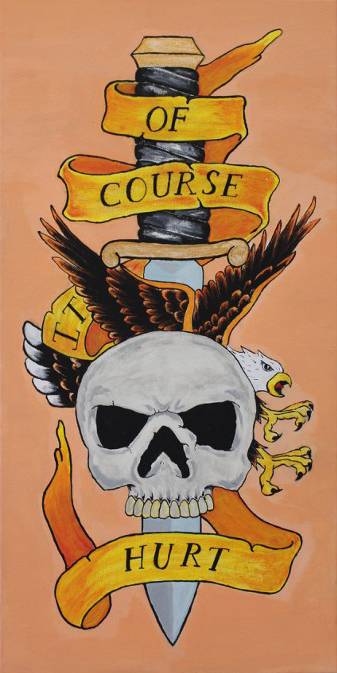
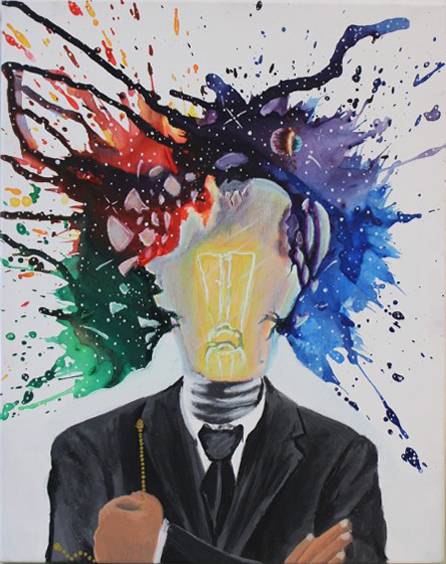
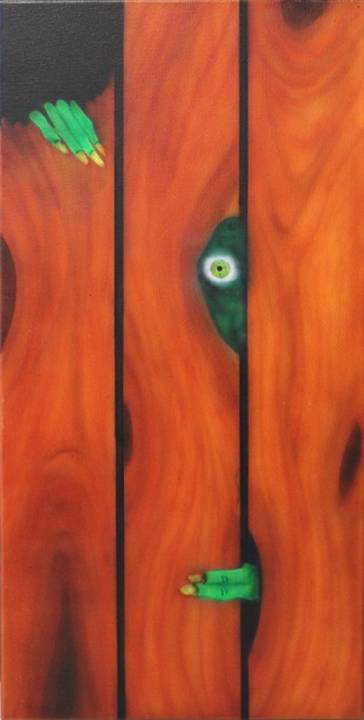
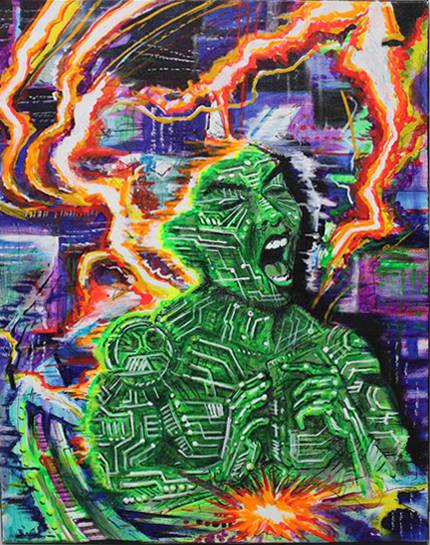
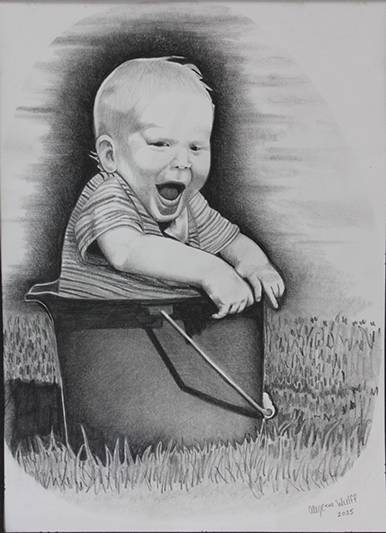
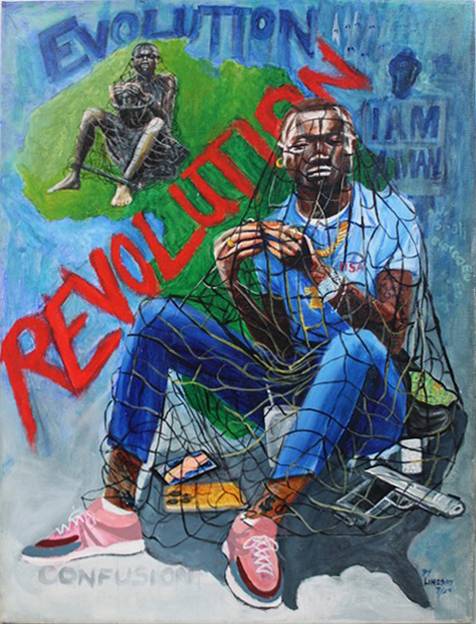
An unconventional art exhibit, “One Art One Community,” on display at Case Western Reserve University’s Wade Park Community Engagement Center, is creating connections between inmates at Grafton Correctional Institution and members of the Cleveland community.
The show was created by Eric Gardenhire, who created and directs the arts and crafts program at Grafton. The exhibit reflects on how art builds community both within incarcerated settings and between the incarcerated population and people who are not incarcerated.
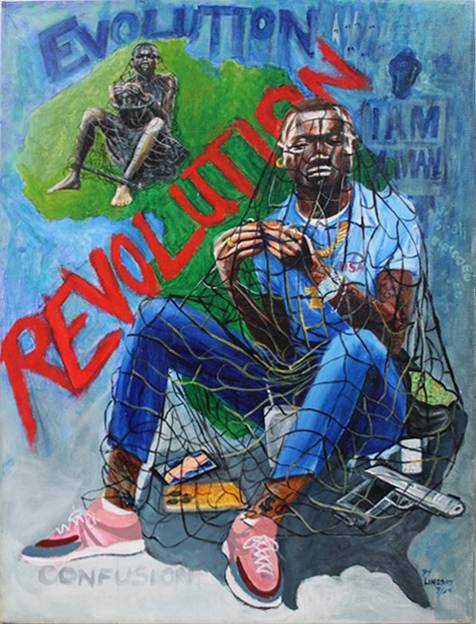 Evolution Revolution Confusion"It allows people to be aware of the impact of incarceration, not as something very far away, but as something that occurs in their community, to neighbors, to friends, to people they know," says Megan Alves, who co-curated the exhibition.
As a recent graduate of CWRU's Master of Art History program, Alves has seven years of experience in curating social justice-minded exhibits.She says the concept of “One Art One Community” was a perfect fit for the Community Engagement Center.
"It is a kind of shared humanity through creative expression that allows [the artist] to cultivate radical empathy and to work from a social justice perspective in a myriad of fields,” she says.
The exhibit, which opened Oct. 30, features 46 pieces by 16 incarcerated artists at Grafton. The works represent a range of styles and artistic abilities—from self-taught artists who never identified as artists before incarceration to individuals with Master of Fine Arts degrees.
Because many of the Grafton residents once lived in the surrounding community or may have been convicted of crimes in the area, the works display only the artists’ first names, last names, or aliases—and no traditional artist statements are included.
Instead, the exhibit features "Community Voice labels"—reflections on the works by Cleveland community members who are impacted by incarceration in various ways.
Some Community Voice labels and authors include:
- Aimee Wissman, co-founder of The Returning Artists Guild, which supports artists returning from incarcerated settings: "Here, you can see the artist's face reflected in a 'player,' a type of tablet that can be used to download emails and video grams. He's boxed in by the bedsprings behind him, grounding us in his restricted carceral world."—to “Still Life.”
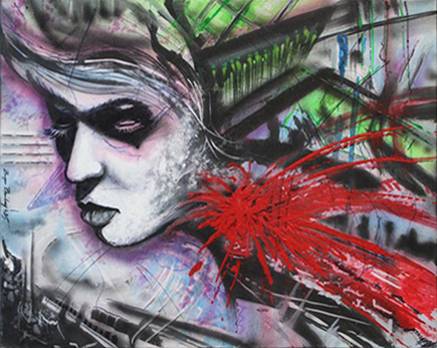
- Gwendolyn Garth, multimedia & social practice artivist and founder of The Kings and Queens of Art: "I see a lot of chaos in this piece. She's beautiful, yet you see the ugly parts, the darkness around the eyes, the heavy lips, the shadows of another self."—to “Born this Way.”
- Brandon Chrostowski, founder of EDWINS Leadership & Restaurant Institute: "For me, this piece brought to light the simplest form of sweetness and humanity."—to “I Used to Know Happiness.”
Central to the project's success is artist and activist Garth, who is also a member of the CWRU Neighborhood Advisory Council and served as a community advisor for the exhibit. Formerly incarcerated herself, where she experienced a life-changing encounter with art, her organization, Kings and Queens of Art, donates canvases and art materials to Grafton residents.
 Malcom X“Gwen is a powerhouse of community advocacy through the arts,” says Alves.
The selection process
The curatorial team, made up of CWRU faculty and staff, went to Grafton Correctional to select the artwork for “One Art One Community.”
"We had this remarkable opportunity to have breakfast with the artists prior to jurying the show," Alves recalls. “After getting to meet them, talk to them about their artistic practice, talk to them about what art means to them—both in and out of these settings—we then, as a group, proceeded to jury the exhibition.”
The team ensured each artist had at least one work in the show while selecting additional pieces that created interesting dialogues and would be particularly connective to audiences.
Finding humanity and beauty
Several themes emerged from the artists' work, despite no curatorial prompts or unifying directions being given, says Alves. However, she says she saw a lot of work tied to meditation on relationship, reform, healing, and other personal journeys.
Additionally, many works celebrate nature, and the natural beauty that is often absent in prisons. "There's nothing beautiful in prison,” observes Returning Artists Guild’s Weissman in her community voice contribution. “And art is a way for people to really reflect and create the aesthetic beauty that their souls are missing within those settings.”
Origins, vision, and impact
The idea for “One Art One Community” came from two CWRU alumni—retired Cleveland federal prosecutor Ann Rowland and former CWRU history professor Ben Sperry—both involved in the University of Michigan Prison Creative Arts Project (PCAP).
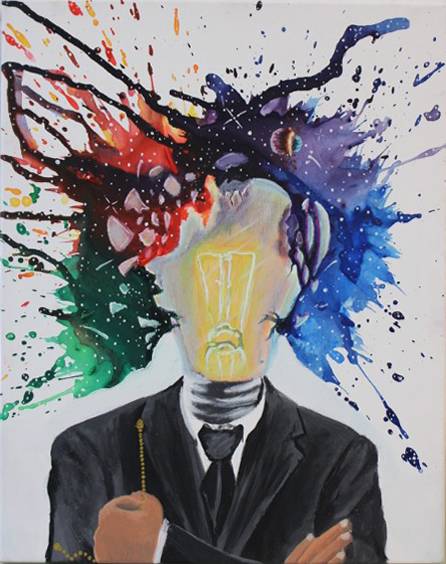 Whos Bright IdeaGrafton’s Gardenhire, who has been working with the residents for almost 20 years, named theexhibit.
"Every creative shares a unique connection that transcends circumstances and locations," Gardenhire said in a statement. "The power of connecting with others on the same creative journey is transformative. Creativity is contagious."
All of the art in the exhibit is for sale. The pieces range from $30 to $1,000, averaging around $200, says Alves, and sales go directly to the artists’ Grafton accounts or into escrow.
"There's no limitations on what they can do with the money,” she says. “It's theirs, just as if the artist was not in an incarcerated setting.”
Bridging two worlds
Because the artists cannot visit the exhibition in person, CWRU alumnus and photographer Giorgio Sabino III documented the show and created video interviews and walkthroughs to share with the incarcerated artists.
Alves calls the exhibit a “two-way exchange” that allows the artists to show their work while enabling the viewers to learn from the experiences of those in prison.
“It allows people to sort of be aware of the impact of incarceration,” she explains, “Not as something very far away, but as something that occurs in their community, to neighbors, to friends, to people they know.”
Alves cites Grafton warden Spatney’s observation that "you're not as bad as your worst day.” She says Spatney’s words capture the exhibition's message—that people in incarcerated settings are being judged on the worst day of their life, and art allows viewers to see them as "more than just a number,” says Alves, “it allows [viewers to see them] as individuals, as people, instead of a conviction.”
The success of "One Art One Community" has sparked plans for it to become an annual exhibition, potentially expanding to include other Ohio correctional institutions and women's facilities.
The "One Art One Community" exhibit runs through Friday, Jan. 9 at the Wade Park Community Engagement Center, 11310 Wade Park Ave., Cleveland 44106. The center is open weekdays from 9 a.m. to 5 p.m. No reservations are required and admission is free. Visitors should ring the bell to enter.