
People, Place, Power, and Prosperity: Hough residents lead push to preserve culture and community
Hough is on the rise, say supporters of redevelopment in Cleveland’s MidTown neighborhood.
This resurgence includes new housing and retail, as well as initiatives such as the MidTown Collaboration Center and the E. 66th Complete Street Project.
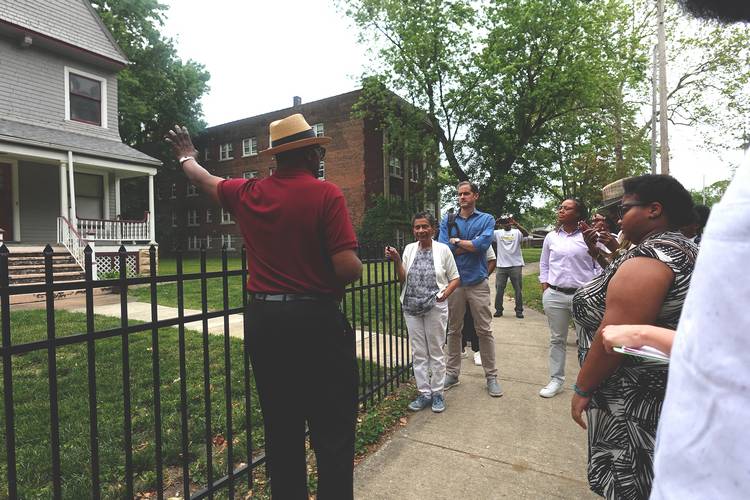
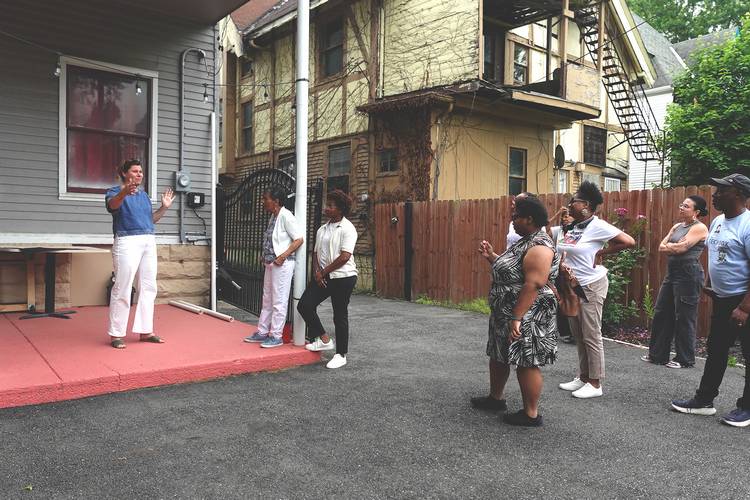
 Residents take a Hough waking tour with MidTown Cleveland.What’s missing, supporters say, is a way to connect those efforts into a cohesive vision for the neighborhood. A recently completed year of community engagement aims to change that narrative with Hough residents at the helm.
The Hough Cultural Preservation Project is a neighborhood-building effort shaped by homeowners, artists, entrepreneurs, and policymakers. The community development model puts residents at the forefront of four interconnected areas: People, Place, Power, and Prosperity.
In practice, this means harnessing the knowledge of those who live and work in Hough, a predominantly Black neighborhood situated between downtown and University Circle.
An April 23 town hall was the culmination of a year-long listening tour with residents—including Vickie Williams, an Army veteran who returned to Hough in 1993 after her military service.
Williams built a home near Chester Road, raised a daughter, and witnessed firsthand the neighborhood’s transformation.
While she didn’t intend to participate in the Cultural Preservation Project, Williams ended up attending four separate community dialogues.
“I just wanted to be in the know,” she says. “Then, I started going to meetings and I liked the idea of the project. I wanted my opinion to be heard.”
A team led by Massachusetts cultural strategy firm Rhodes Heritage Group worked with Williams and her neighbors to shape Hough’s future. A joint effort with MidTown Cleveland and Cleveland consultancy ThirdSpace Action Lab, the program aims to transform lived experiences into concrete outcomes.
“A year ago, we set out to listen and learn,” said Monica Rhodes, founder of Rhodes Heritage Group, in an April 7 press release. “What we discovered was joy, beauty, and brilliance already shaping Hough. This is a Black community full of imagination, strength, and vision.
“This is about making sure the work continues in the hands of the people who live here,” Rhodes continued. “We don’t want this to sit on a shelf. We want to turn ideas into action.”
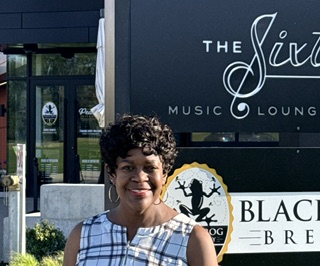
 Hough resident Vickie Williams believes her neighborhood should be marketed similar to other ethnic enclaves such as Little Italy and AsiaTown.Getting their say
Over the past 12 months, Rhodes’ group worked with residents and community leaders in Hough, intentionally positioning residents as primary decision-makers.
“What makes this place special?” asks Rhodes. “Culture is both tangible as well as intangible. How do we define culture, and what does belonging look like?”
With the four-pillar framework as a guide, project officials considered Hough’s cultural history with its ongoing redevelopment efforts. The preservation effort comes as several major development projects continue reshaping Hough.
The neighborhood, an epicenter for the Civil Rights movement in the late 1960s, now hosts a stretch of the RTA HealthLine along Euclid Avenue.
The transit line has spurred billions of dollars in development—Hough has enjoyed growth in the form of mixed-income housing, including the 80-unit Gateway66 complex next to League Park.
The Innova Apartments on Chester Avenue offer another market-rate option for a growing community, say officials.
Additional development includes Penrose Development’s adaptive rehab of the historic Warner & Swasey building into an apartment and commercial space.
In the meantime, the Hough Cultural District along East 55th, East 66th, and East 75th Streets is slated to honor Black history in music and theater.
It may seem obvious, but residents who remember long-gone cultural landmarks like Leo’s Casino deserve a say in the sustainability of their streets, adds Rhodes.
“They are key stakeholders because this is where they live,” Rhodes says. “There are ‘experts’ who don’t always know what a community needs, so it’s important for residents to be in the driver’s seat.”
A look ahead
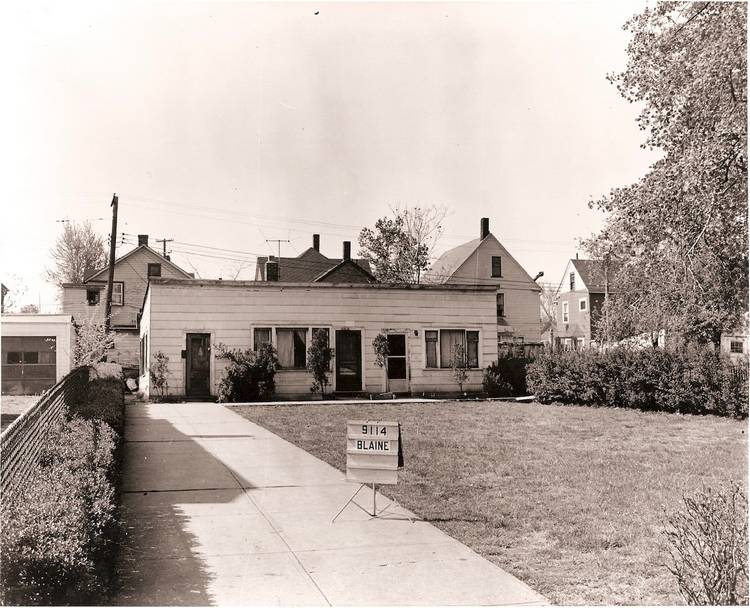
Williams has witnessed a neighborhood in transition in her years as a homeowner. Though still primarily Black, recent redevelopment has drawn a wider segment of ethnicities to the East Side district. Williams grew up in a busy household at 9114 Blaine Ave. alongside seven siblings, where the family remained until her father retired and built a new home near South Miles Road.
 MidTown Cleveland executive director Ashley Shaw greets residents during a walking tour of Hough last summer. Looking ahead, Williams says she would like more restaurants as well as the return of cultural touch points like Donut Fest.
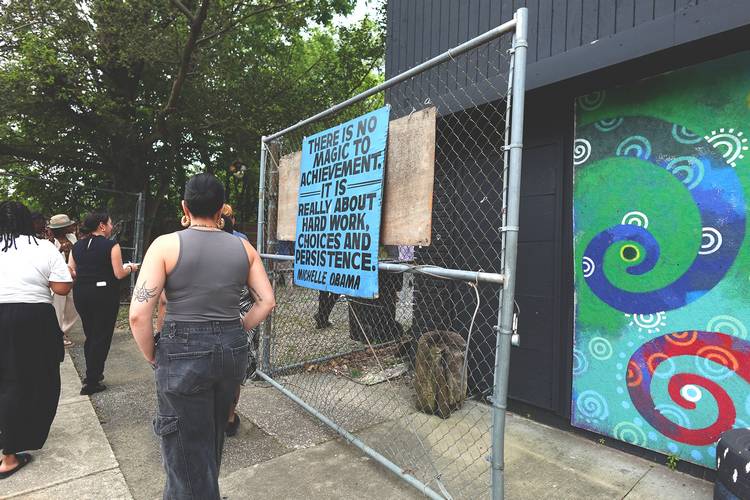
Banners that champion Hough’s history can deliver both education and a sense of pride to young people considering their future. With Hough’s “slum” label in the rearview, Williams says she believes the community deserves the same level of investment and recognition as Cleveland’s other ethnic enclaves.
“We have Little Italy and AsiaTown—we want that in Hough for Black people,” Williams says. “What does Hough have for younger generations to make them stay, or make them come here? Hopefully, Hough will be a better place to raise your kids, get a job, or start a business.”
Anthony Giambroni, vice president of community development with MidTown Cleveland, acknowledges the anxiety people may feel about being sidelined during a period of rapid growth and investment.
Building on the foundation of previous community dialogues, a new governance board will ensure that resident leadership is an official part of the ongoing process, he notes.
“These are people who have solutions for the neighborhood they know best,” says Giambroni. “Hough is a place to attract people and be economically engaging. Residents want to see that, too.”
