
Steady under pressure: Ohio manufacturers remain optimistic despite tariffs, economic hurdles


Ohio manufacturers are staring down a host of industry challenges these days—it’s a list that covers increasing cost pressures and tariff-related turbulence. Yet, these businesses are maintaining a positive outlook as 2026 begins to gain momentum.
“This is not a story of retreat,” says Ethan Karp, president and CEO of Cleveland’s Manufacturing Growth Advocacy Network (MAGNET), which released a statewide survey of manufacturing leaders earlier this month. “Manufacturers are operating in a harder environment, but they are adapting in practical ways. They are being disciplined, focused, and intentional about how they move forward. And despite the headwinds, they are optimistic about growing in the year ahead.”
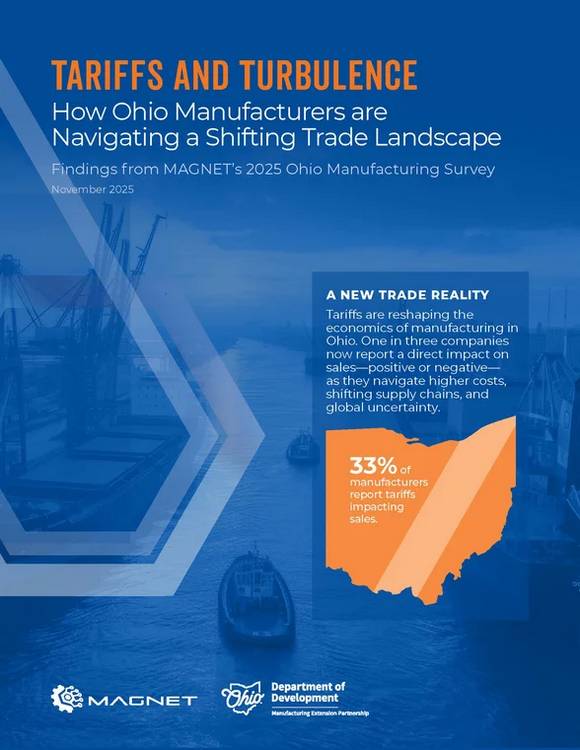
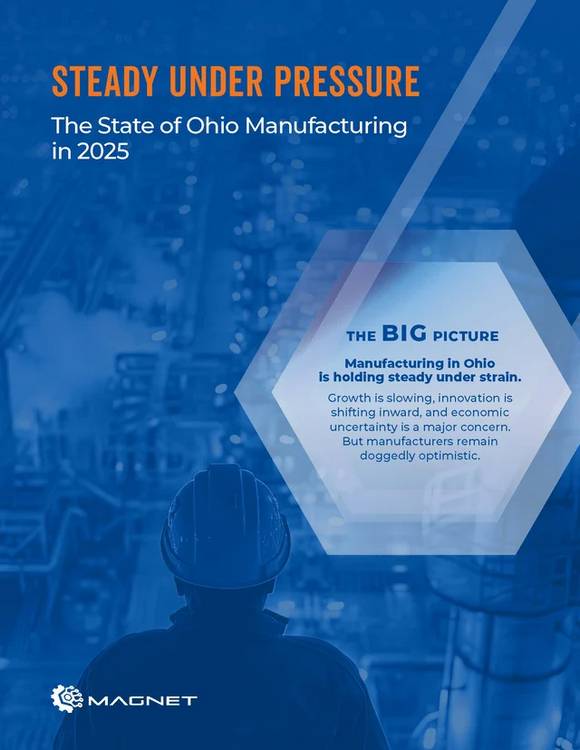
 MAGNET's 'Steady Under Pressure: The State of Ohio Manufacturing in 2025.'The survey—Steady Under Pressure: The State of Ohio Manufacturing in 2025—captures the insights of nearly 300 Ohio producers. About 43% of respondents say that economic uncertainty is hampering growth, with many companies prioritizing production process improvements (74%) and technology upgrades (72%) over innovation.
Although 48% of the state’s manufacturers grew their revenues last year, that number pales in comparison to 65% that reported growth in 2023. And while labor shortages on the entry level are easing, the industry is now grappling with a “readiness gap,” particularly in preparing new hires for essential technical positions.
The discouraging findings stand in contrast to the underlying sense of confidence that also persists throughout the manufacturing industry. Optimism is strong overall—70% of Ohio manufacturers say they expect to increase headcount in 2026.
To that hopeful end, businesses are now stabilizing operations, improving productivity, and building internal capability, notes Karp.
“Economic uncertainty is driving people away from innovation and into things where they can tighten their belts and prepare for any more positive or negative shocks to their system,” Karp says.
Running a tight ship
Rather than taking big swings in 2026 with new products or services, local producers are targeting maximum efficiency with new facility layouts. Beyond operational shifts, manufacturers are focused on cybersecurity along with deployment of AI-driven monitoring systems to oversee production.
That said, Snyder touts that fact that Talan is not in a “defensive space”—the firm grew its revenue by 26% over the last year alone.
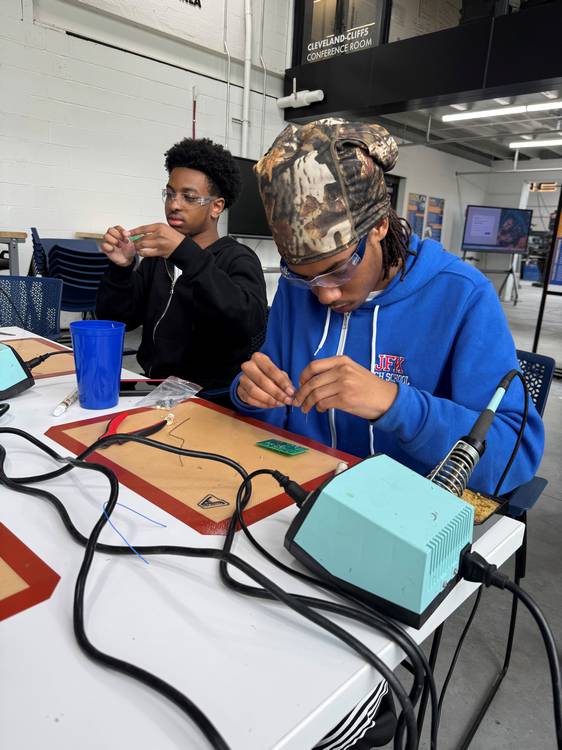
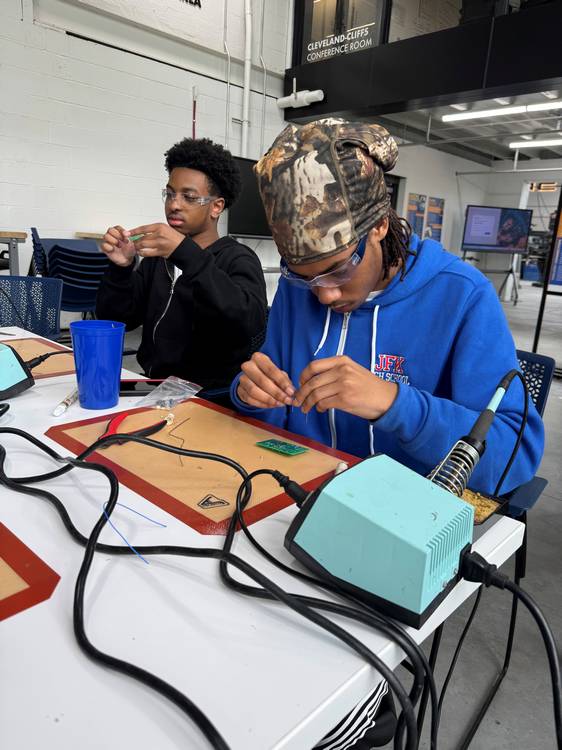 MAGNET Summer Manufacturing Academy students Bryce Brown, left, and Sethe Johnson, take part in a soldering course in the advocacy group’s headquarters in Hough.“Companies are focusing on immediate issues, although upgrading equipment is a bet on the future, too,” he explains. “But you still have to make big bets on product and service development, because that’s what’s going to refresh you every couple of years.”
Reshoring and tariffs continue to reshape state supply chains, but only 9% of Ohio manufacturers have brought their production back to the U.S.
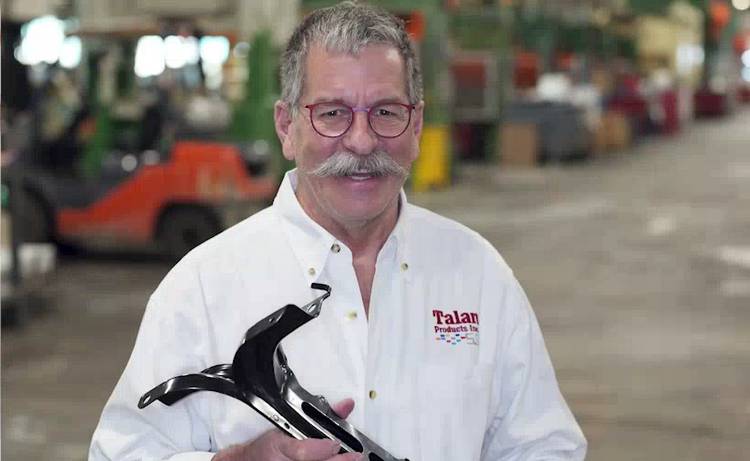
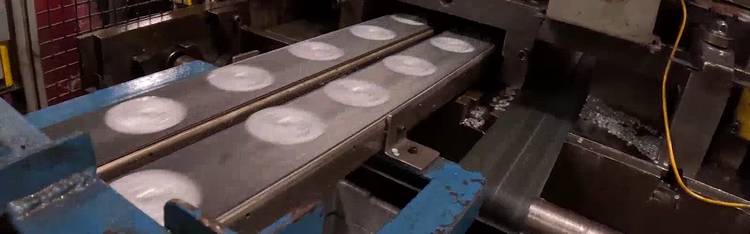
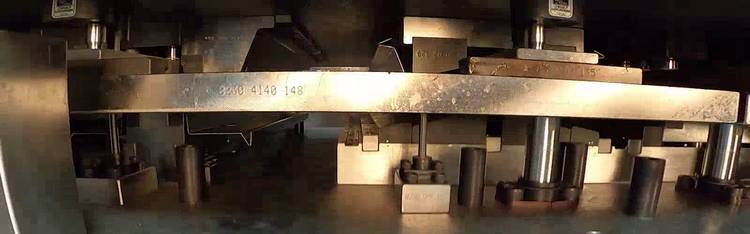
At Talan Products, a Cleveland tooling, metal stamping, and engineered parts producer, tariffs have had some impact on material costs. However, indecision borne from uncertainty has proven a larger issue for Talan customers, says chief operating officer Adam Snyder.
“When our customers don't know what the tariffs will be next week, month, or year, it is hard to make on-shoring and reshoring decisions,” he argues. “The chaos around tariff scope and timing is having a much bigger impact than the actual tariffs.”
Operating as a contract manufacturer provides some strategic cushion, says Snyder, even as Talan sharpens its industry focus. As just one example, he points out that the company has become more selective about its automotive partnerships.
That said, Snyder touts that fact that Talan is not in a “defensive space”—the firm grew its revenue by 26% over the last year alone.
“We’re being thoughtful about how we operate,” he says, adding that Talan management asks questions like “What are the right customers for us?” and “What are the right projects for us?”
“We’re confident about what we’re great at,” Snyder says, “while doing more of that work and increasing our capabilities in capacity and new processes.”
For example, Snyder says Talan is now exploring AI-driven training tools to upskill entry-level stampers and machine operators into specialized technical roles. The company is also talking to MAGNET about technical-level training, as well as an “earn-and-learn” pilot program for employees interested in more advanced (and better paying) work.
However, he stresses that early engagement will be key in cultivating the next generation of technical talent.
“We need to build awareness in [grades] K-12 for these technician roles,” Snyder says. “The team we’ve put together at Talan is very strong, and an element of that success is keeping the momentum growing on the revenue and operational effectiveness side.”
Optimism (mostly) reigns
MAGNET is leaning into a practical strategy to guide local firms through today’s more guarded economic climate.
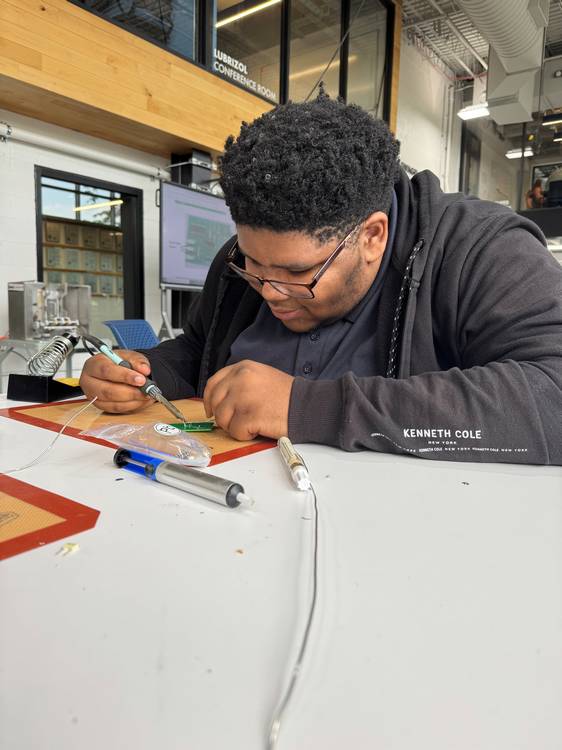
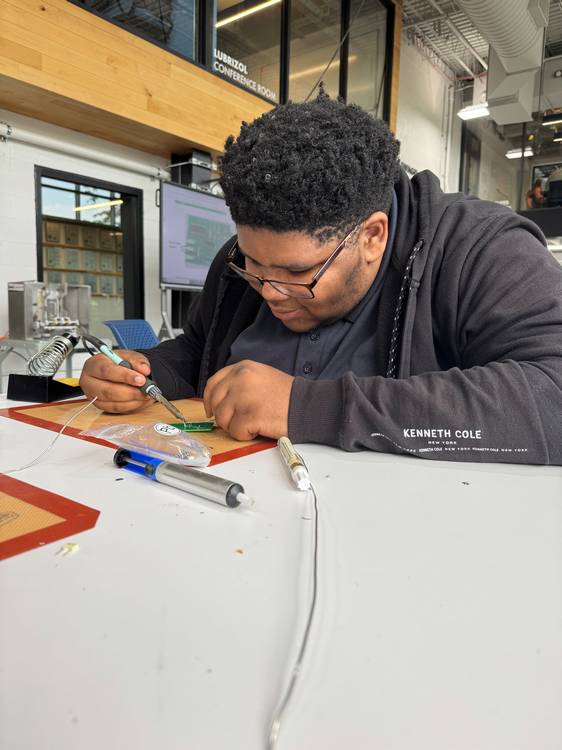 A student in the MAGNET Summer Manufacturing Academy takes part in a soldering course in the advocacy group’s headquarters in Hough.Although MAGNET eliminated 37 positions from its 75-person staff in the wake of the Dec. 5 suspension of the Ohio Manufacturing Extension Partnership, advocacy group leader Karp says his organization has “doubled down” on its core consultancy and workforce services.
He stresses that bringing in workers is part of that mission, but “retention is the new recruitment” when it comes to shoring up a company’s talent pipeline. According to the MAGNET manufacturer survey, 82% of businesses are “actively improving” workplace culture, notes Karp, with another 56% engaging with high schools and vocational programs through tours, internships, and partnerships.
Karp is enthusiastic about the potential indicated in the latest data. “You can have great entry-level workers and great technology, but you need to create that strong environment,” he says. “Let’s retain these workers while skilling them up and getting them into technical roles. Let’s put them into groups of supervisors to learn those skills.”
Tariffs continue to be a wrench in some of these plans, however. Average losses from tariffs (-16%) are nearly twice that of average gains (+9%)—separating the firms able to adapt from those that cannot.
Still, Ohio’s industrial leaders remain undeterred, citing growth opportunities that point toward a recovery.
“There is a lack of impending doom, and generally a sense of excitement [about the future],” Karp says. “These companies are under pressure, but they’re holding steady despite all the uncertainty.
“Manufacturing is more important than ever,” Karp continues, “and we need to support our companies so they can provide the community with great jobs.”
