The legacy lives on: Cloned Jesse Owens oak saplings find new stewards through auction
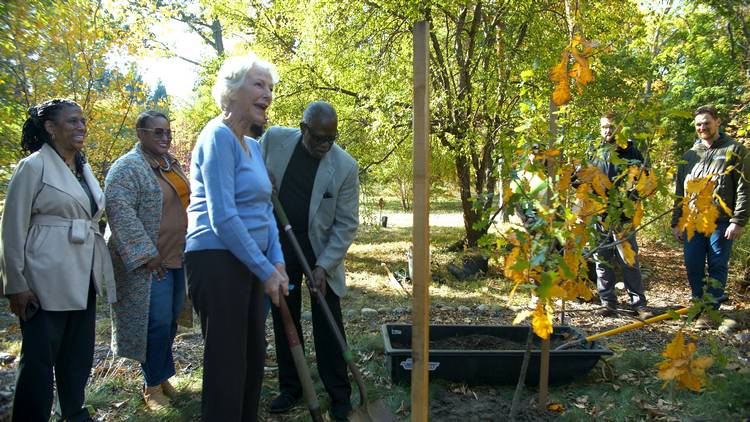
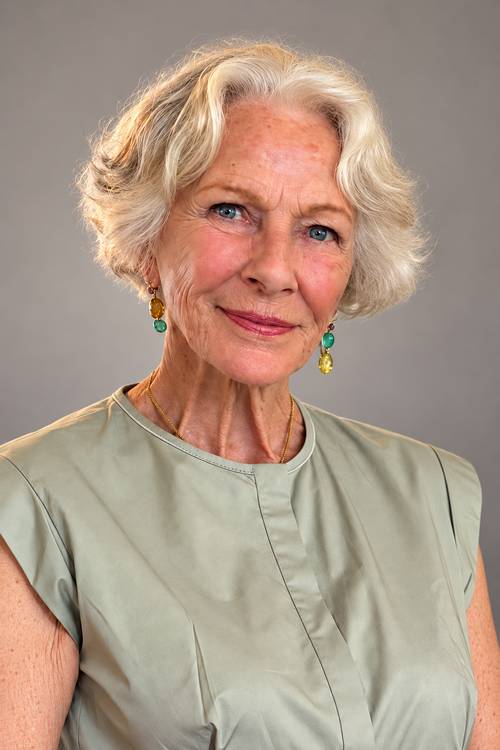
 Cleveland philanthropist Madelaine Parker.A Cleveland philanthropist has become the first public steward of a cloned English oak sapling descended from one of four trees Jesse Owens brought home from the 1936 Berlin Olympic Games.
Cleveland philanthropist Madeleine Parker successfully bid on the first auctioned sapling when Cleveland Black Equity & Humanity Fund (CBEHF), powered by The Soul of Philanthropy, hosted the initial sapling auction in August. The auction was part of the fund's "Race for Peace, Equity & Enduring Humanity" campaign, which aims to raise $1.5 million and engage at least 10,000 people through educational programs, community events, partnerships, and storytelling.
CBEHF is now encouraging additional stewards to help preserve that living connection to the Olympic champion's legacy.
A second public auction is now underway, offering another opportunity to become a steward of a genetically identical replica of the original Jesse Owens oak. The auction runs through Monday, Nov. 30, with minimum bids starting at $25,000.
Proceeds from the auction go to CBEHF, the Jesse Owens Foundation’s scholarship and educational initiatives, and Holden Forests & Gardens’ education and conservation programs.
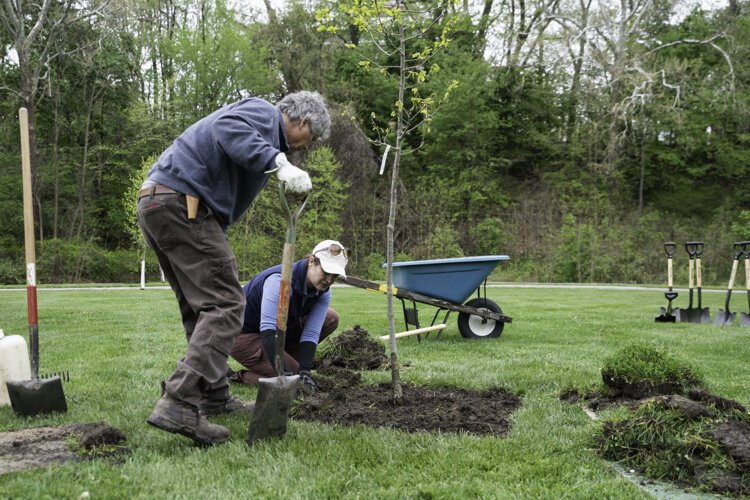
Parker, whose philanthropic support includes the Cleveland Metroparks, Cleveland Ballet, and Cleveland Museum of Art, planted her sapling in her yard. Holden Forests & Gardens coordinated the planting with support from Bartlett Tree Experts.
"Jesse Owens' legacy reminds us that courage can change history,” Parker said in an October statement by CBEHF. “Caring for this sapling honors his legacy and helps carry it forward. I hope my support inspires others to join CBEHF in strengthening our community and creating opportunities for the next generation."
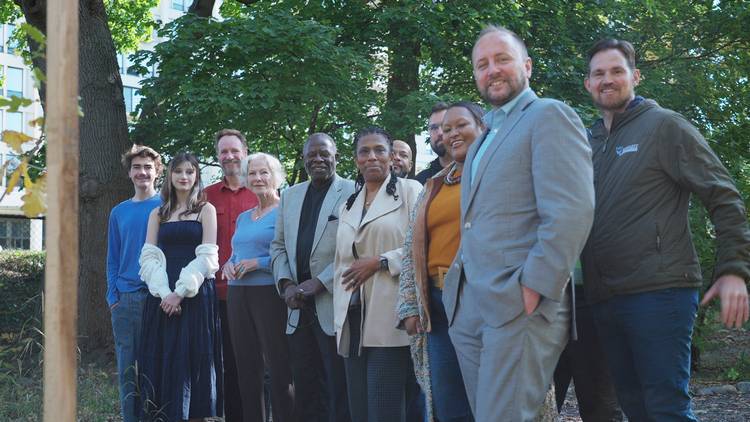
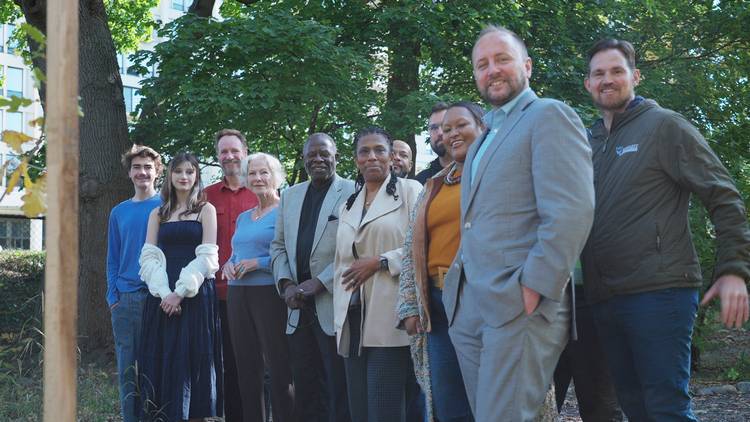 The Jesse Owens clone team, including members of the Cleveland Black Equity & Humanity Fund, Holden Forests & Gardens, Bartlett Tree ExpertsKeeping Owens' Cleveland legacy alive
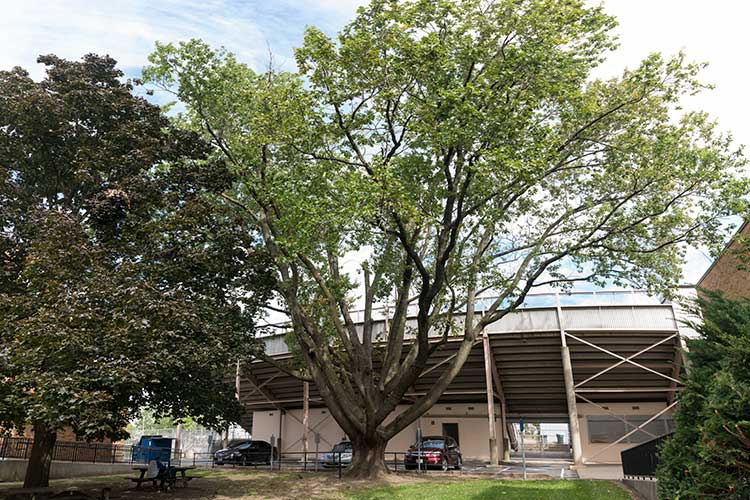
The cloned Jesse Owens saplings come from the original Jesse Owens oak planted in 1937 at James Ford Rhodes High School in Old Brooklyn as a symbol of athletic and cultural triumph.
Before the tree succumbed to old age in 2022, it was horticulturally propagated—essentially cloned—in 2017 by Holden Forests & Gardens, working with Old Brooklyn Community Development Corporation (OBCDC) to preserve Owens’ Cleveland legacy and place in history.
For CBEHF, the effort is about more than preserving a historic tree. The organization's officials see Owens' story as an opportunity to bring greater recognition to his accomplishments while highlighting the importance of Black philanthropy and community investment.
Teleangé Thomas, cofounder of CBEHF and a member of its executive steering committee, says the organization’s work is rooted in building stronger connections between philanthropy and community.
“Our mission overall is to connect partnership, resources, and investment to uplift socioeconomic opportunities for the Black community specifically and Greater Cleveland generally," she says.
CBEHF became involved in the effort to preserve the saplings as a community partner, working with Holden Forests & Gardens to find new stewards and extend the trees' legacy.
Thomas says CBEHF recognized that Owens' connection to Cleveland deserved more attention.
"We realized it wasn't as ingrained and it wasn't as entrenched in the Cleveland narrative and in the Cleveland mindset as we believed it should be,” she says. “[It wasn’t] at the level of honor and acknowledgement that we believed was called for.”
Thomas adds that CBEHF officials want people to remember Owens for both his historic athletic accomplishments and his character and the courage he demonstrated off the track.
"We just want to give him his just dues and ensure that that story and that legacy endures here in Cleveland and beyond," she says.
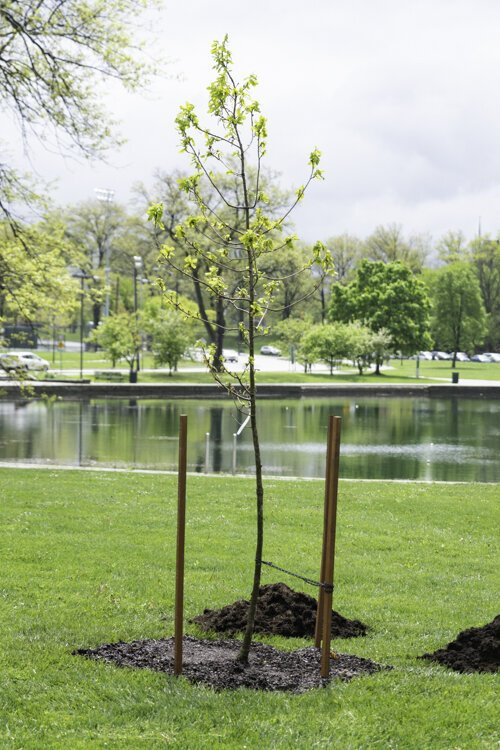
 The Jesse Owens cloned sapling planted at Rockefeller Park in 2021.Preserving a living piece of Olympic history
Owens received four English oak saplings—one for each gold medal he won at the 1936 Berlin Olympics. One of the four was planted at Cleveland's James Ford Rhodes High School, where Owens practiced track.
The other three oaks were planted at East Tech High School, where Owens attended secondary school; The Ohio State University, where Owens attended post-secondary school (the location of the tree is not confirmed); and the front yard of the house that Owens bought for his parents in Cleveland.
The original four English oak trees were lost to time—with the final surviving tree at Rhodes High School succumbing to old age in 2022. Holden Forests & Gardens and its horticultural partners worked to preserve its lineage through grafting of the Rhodes tree before it died.
The saplings now being sold through the CBEHF auction are genetic replicas of that original tree.
David Burke, Holden Forests & Gardens' vice president for science and conservation, explains that the process involved taking branches, known as scions, from the original oak and grafting them onto rootstock grown from another English oak.
"That tree is a genetic copy of the tree at the Rhodes High School that Jesse Owens brought back from the Olympics," Burke says.
The effort produced approximately two dozen saplings, about 20 of which are currently in Holden F&G's care at the Holden Arboretum.
The first cloned sapling was successfully planted in 2021 at Rockefeller Park. A second clone was planted at Rhodes in 2022.
The cloned trees are now six to 12 feet tall, Thomas says, and healthy enough to be planted in permanent locations.
“It’s been fun watching them grow,” Thomas says, “and even more exciting to find homes and new stewards to ensure their legacy endures.”
Some clones even produced acorns this year, but growing a tree from one of those acorns would not produce an exact genetic replica. Burke explains that acorns result from cross-pollination and genetic recombination, making grafting the way to preserve the original tree's genetic identity.
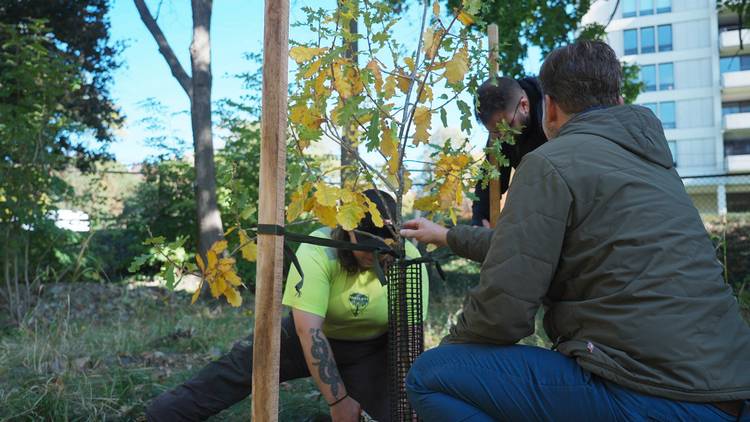
Holden currently cares for the container-grown saplings until new stewards are identified. Bartlett Tree Experts will coordinate transportation and planting and provide one year of care to help each tree become established.
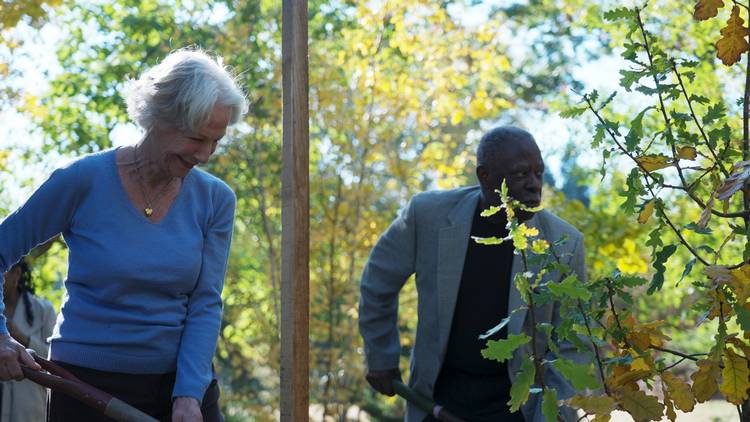
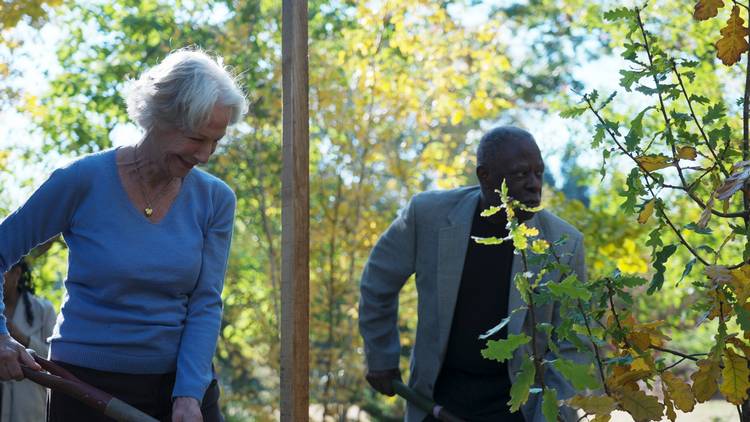 Philanthropist Madelaine Parker, members of Cleveland Black Equity & Humanity Fund Bartlett employees, and volunteers plant a cloned Jesse Owens sapling.Finding new stewards
Thomas says the auction is intended to introduce the trees to a broader audience and encourage people to become part of preserving Owens' legacy.
"We want the public to be able to touch [the trees], to engage with them, to reflect on the history and the story," she says, adding that CBEHF officials also want to plant the trees where people can access them and learn about their significance.
Thomas says CBEHF anticipates hosting a third sapling auction before the end of the year. She says they are currently exploring additional institutional partnerships.
The current auction closes Monday, Nov. 30. Interested bidders and donors should go to the auction page and follow the instructions for bidding on the sapling on the OneCause auction page.
Participants can register to watch the auction or place bids, including setting a maximum bid that automatically responds to competing offers.
Proceeds will support CBEHF programs and community partnerships, educational initiatives through the Jesse Owens Foundation, and community outreach, education, and conservation programs at Holden Forests & Gardens.