
A path forward after tragedy: EDWINS starts youth culinary program after neighborhood shootings


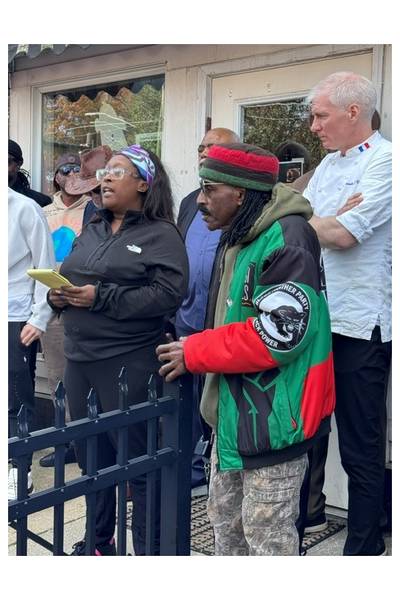
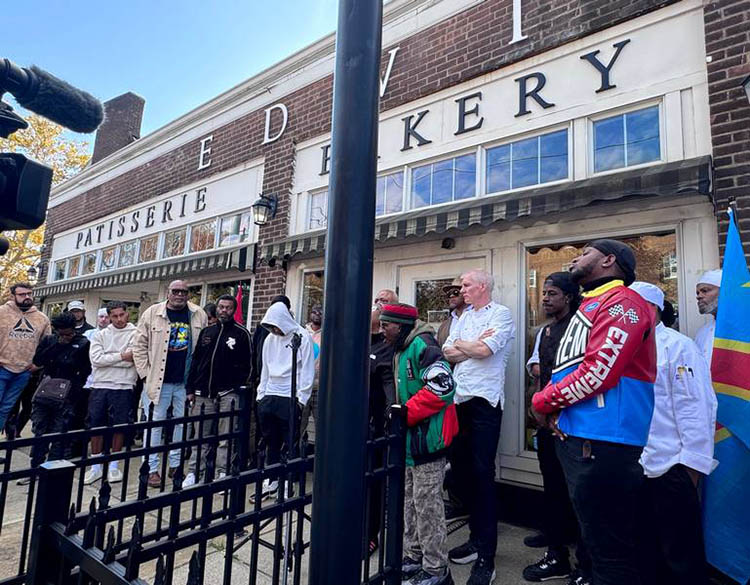
In late October, over the course of just five days, three young men were killed in a series of shootings. The tragedies hit especially close to home for the EDWINS Leadership & Restaurant Institute community.
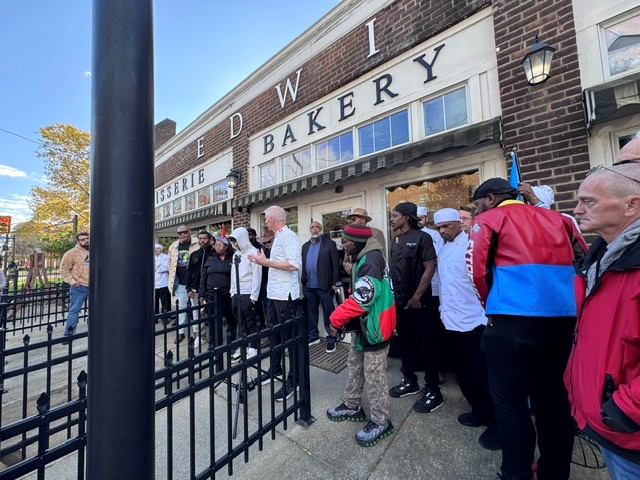
 The EDWINS community gathers at the EDWINS Buckeye campus to remember young lives lost to violence.One was the older brother of a current EDWINS student. Another was Johnathan Bradley, the 17-year-old son of EDWINS graduate Charlotte Thomas, who was killed at a Cleveland Heights home.
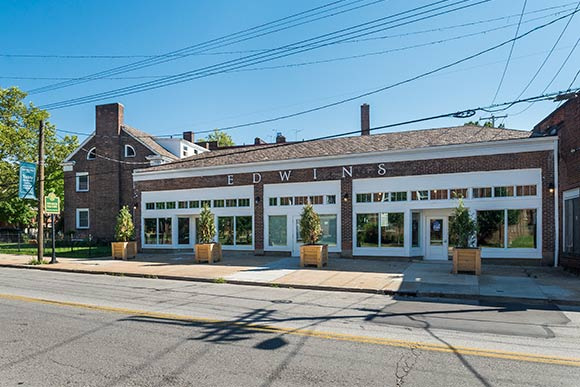
The third, 17-year-old Shaker Heights High School student, Jaiden Tunson, was killed Oct. 26 near Buckeye Road and South Moreland Boulevard, across from EDWINS Butcher Shop & Training Center in the Buckeye neighborhood.
EDWINS founder and CEO Brandon Chrostowski saw the loss and the violence as a call to action.
“I just returned from Ukraine, and there are more youth dying in Cleveland than Kiev,” Chrostowski said at a Thursday, Oct. 29 press conference on the EDWINS campus.
“What do you do? You do something, right?” Chrostowski asks. “Doing nothing is bad, so the idea was to do something.”
Chrostowski’s way of doing something is to launch a four-week culinary training and mentorship program for young people ages 14 to 18.
The program, which brings together EDWINS staff members, Cleveland restaurant owners, and longtime community activists, was originally scheduled to begin Monday, Nov. 9, but the response was so strong—about 60 teens between 14 and 17 signed up—that Chrostowski launched the first class this week, on Tuesday, Nov. 3.
“You got to do things quickly,” he says. “We have a team at EDWINS that moves fast and the idea was to start the class immediately. So we started [Tuesday].”
Chrostowski says about 30 teens came to the inaugural class. “Last night was great!” he exclaims. “I don’t think there was a more beautiful day I can remember. All I could hear were knives chopping. No talking. It was all focus.”
The students come from Buckeye, Shaker Heights, and other Cleveland neighborhoods, with many living within a mile or two of EDWINS.
For EDWINS graduate Thomas, mother of 17-year-old Johnathan, the program is one way to turn her loss and grief into action. “We cannot let our children die in vain,” she told the crowd at the Oct. 29 press conference.
 EDWINS culinary classThe kitchen as a starting place
Chrostowski says the program adapts EDWINS’ established culinary training model for formerly incarcerated adults into a four-week introduction for teenagers.
Rather than trying to cover everything in EDWINS’ original six-month program, the young participants will learn foundational cooking skills and get a first look at working in a professional kitchen.
Chrostowski says the first class on Tuesday focused on making chicken noodle soup—giving students a chance to practice knife skills by learning to cut carrots, onions, and celery; prepare chicken; and use basic cooking techniques.
He says food safety and sanitation are incorporated into each class, rather than taught in one lengthy session.
Last night’s lessons moved into preparing fajitas—working with different proteins and vegetables, and cooking rice. The third class, Chrostowski says, will introduce students to roasted salmon with hollandaise sauce and mashed potatoes.
Chrostowski says the goal is to not simply teach young people how to prepare a meal—he wants them to experience the satisfaction of making something well and see what they can accomplish when they try something new.
“Just get engaged and show that you can make something wonderful,” he tells his young students.
That sense of culinary accomplishment will keep the students coming back, Chrostowski explains. As the students become more comfortable in the kitchen, he says they may also begin to see alternatives to negative circumstances or influences that might currently surround them.
The program is also designed to emphasize habits that help people succeed at work and in life, Chrostowski says. Participants will practice teamwork, communication, accountability, and showing up.
“We're going to teach them [youth] how to cook, but more importantly, we're going to give them the tools, the support and the confidence to build a future,” Chrostowski says. “We can't bring back the lives we've lost, but we can fight like hell for the ones we can still save.”
The curriculum includes employment preparation, while mentorship and community support will address needs beyond the kitchen.
“You learn from mistakes, you learn from good mentorship,” Chrostowski explains, adding that that he sees those lessons emerging from developing relationships—not through lectures.
Interpersonal skills and conflict resolution will be part of the experience, he says, but those conversations need time and the right support.
“You can't rush these things or force it down their throat.” Chrostowski warns. “It has to kind of happen over time.”
A community response
Looking for a proactive solution, Chrostowski reached out first to three longtime community activists.
- Fred Ward is executive director of the KHNEMU Foundation and state director of Building Freedom Ohio. Ward works with individuals and families affected by the justice system through policy advocacy, trauma-informed care and community support.
- Art McKoy, founder of Black on Black Crime Inc., advocates for safer neighborhoods, crime prevention and justice for victims of violence.
- Al Porter Jr. is a Cleveland community leader and youth advocate who uses music, media, and education to empower young people and encourage positive change.
 The early days of EDWINS Leadership & Restaurant Institute
The EDWINS program is intended to provide more than culinary instruction. EDWINS’ community partners will help connect young people with mentorship, grief counseling, conflict resolution, and trauma-informed support.
Chrostowski says Ward, McKoy, and Porter bring an important perspective to the work.
“They're activists, man,” he says. “They get it. They know what it's about.”
At the Oct. 29 press conference, Ward compared the violence affecting young people to a pandemic. He urged lawmakers to reinvest and reallocate funding for youth-focused community programming to help heal families and neighborhoods.
“We need to infuse understanding,” Ward said. “Stop the violence. Put the guns down.”
McKoy called for those responsible for the shootings to be held accountable.
“We’re demanding these scoundrels be found,” he said at the press conference. He also expressed compassion for single mothers facing the pressures of raising young men without enough support. “We can’t blame the mothers,” he added.
An example of a community-based intervention program like what Ward refers to is Thrive ED at MetroHealth, where State Certified Peer Support Specialists provide support and connect people with treatment and recovery services in MetroHealth's Main Campus Emergency Department, as well as inpatient and outpatient units.
Peer Support Specialists draw on their own lived experience with mental health or substance use disorders and recovery. They complete formal certification through the Ohio Department of Mental Health and Addiction Services.
Restaurants step up
The response from local restaurants has been just as immediate, Chrostowski says, with more than a dozen restaurant and hospitality businesses committing to assisting or hiring program graduates.
Restaurant and hospitality businesses stepping up include: Dante, Crispy Chick, The Club Room at Fidelity Hotel, Edison’s Pizza, Orlando Bakery, Geraci's, NCR Ventures, Vessel Hospitality Group, Mahall’s, Parky’s, and Poppy.
Some of these partners will have opportunities for participants to continue building entry-level skills in areas such as pizza making and bread production. The goal is to give young people a foundation they can build on as they move toward employment.
 Culinary Students at the Kitchen“We're restaurant people, this is what we do,” Chrostowski emphasizes. “They said yes. And we called the restaurants. They said yes.”
He says the restaurant community's willingness to participate helped the organizers move quickly.
The initiative builds on EDWINS’ longstanding work using culinary education, employment training, and support services to help formerly incarcerated people create new paths for themselves.
By reaching young people earlier, Chrostowski says he and the program partners hope to give participants skills, connections, and a place to belong.
Building something that continues
The four-week program is designed as a starting point, not a one-time response. Chrostowski says EDWINS will continue to support participants and will start additional classes with new groups of students, as needed.
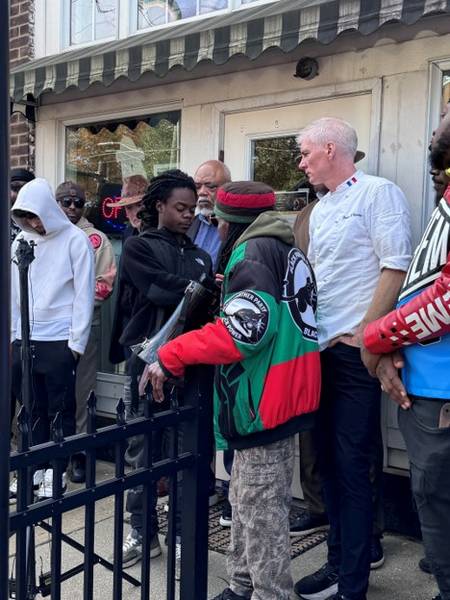
 Brandon Chrostowski and The EDWINS community gather at the EDWINS Buckeye campus to remember young lives lost to violence.“We've got systems in place for sure for this,” he says. “And then we'll start another class with a new group of students. So we'll keep this ongoing.”
He is also looking ahead to a public dinner, tentatively planned for Saturday, Dec. 5, when the program participants will prepare the meal.
For now, Chrostowski wants the young participants to have room to settle in, learn, and develop relationships without feeling that they are being put on display.
“You just want them to get settled in and feel like they're valued,” he says. “And they are.”
The response from restaurants, activists, volunteers, and families has helped EDWINS get the program off the ground quickly, Chrostowski says, adding that he hopes that momentum will continue—giving more young people a reason to show up, learn something new, and consider a different direction.
“So many people stepped up,” he says. “So it's like, let's just get started now. Let's get them someplace they need to be—instead of some place you shouldn't.”
EDWINS is already accepting applications for its second Youth Culinary Program, which begins Tuesday, Dec. 15.
About the Author: Karin Connelly Rice Karin Connelly Rice enjoys telling people's stories, whether it's a promising startup or a life's passion. Over the past 20 years she has reported on the local business community for publications such as Inside Business and Cleveland Magazine. She was editor of the Rocky River/Lakewood edition of In the Neighborhood and was a reporter and photographer for the Amherst News-Times. At Fresh Water she enjoys telling the stories of Clevelanders who are shaping and embracing the business and research climate in Cleveland.
