When every breath counts: Tim Tench’s race for a double lung transplant

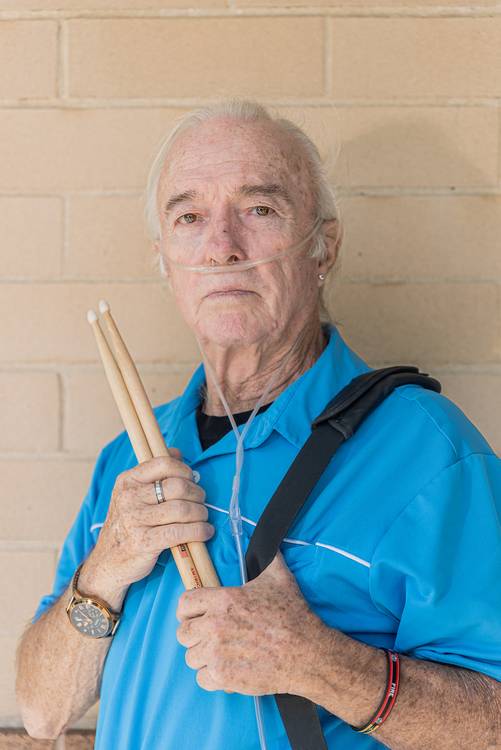
Tim Tench has always led an active lifestyle. The lifelong Bedford resident worked for 22 years as a maintenance tradesman for Cleveland Heights-University Heights City School District and served for 16 years on the Bedford City School District Board of Education.
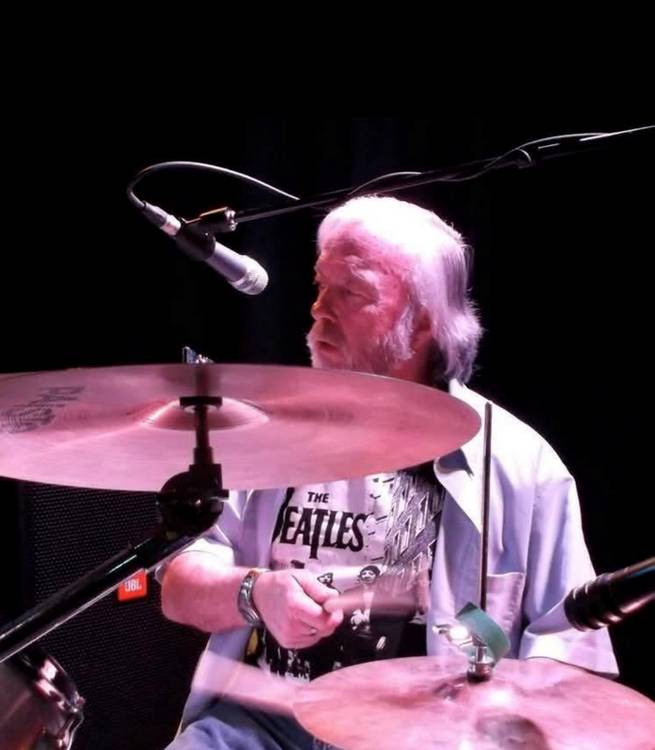
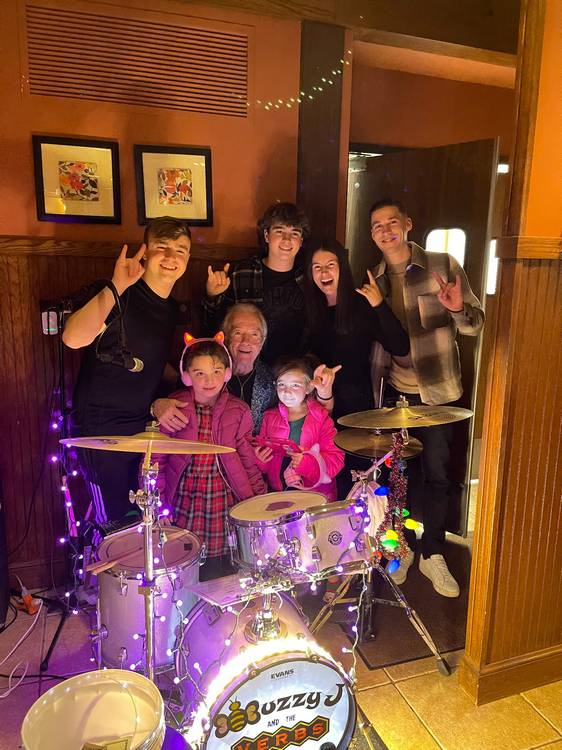
Today, at age 74, Tench’s normal routines include playing drums in his rock band Buzzy J and The Verbs, daily walks in the Cleveland Metroparks, and golfing. Additionally, he played hardball well into his 60s.
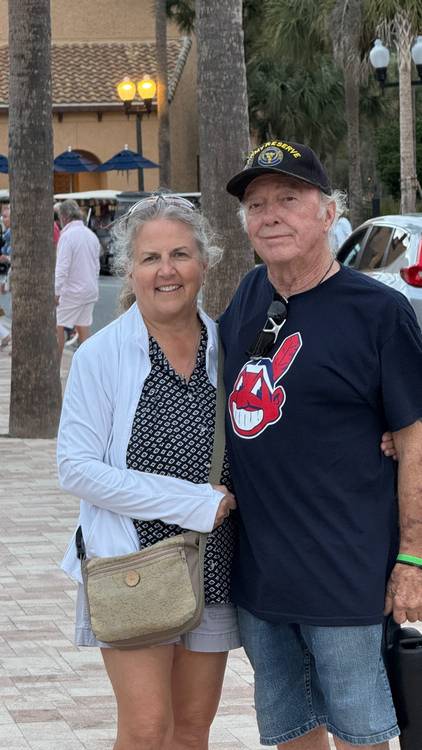
 Tim and his partner and caregiver Linda, enjoying the Florida warmth.But during the summer of 2021, at age 69, Tench noticed he was getting winded during one of his baseball games.
"I noticed that I was running out of breath—just running in from the outfield, [and from the] outfield into the dugout,” Tench recalls. “Man, I thought, ‘Well, I'm just out of shape.’ So I started walking. I was walking three miles a day and working out.”
By 2023, Tench’s health was getting worse. He couldn’t make it halfway up a hill on one of his regular walks.
"I changed my walk and started on an incline instead of just starting on level ground... and I'm halfway up the hill and I cannot breathe, and I was on the verge of having a panic attack because I just couldn't catch my breath."
The experience would mark the beginning of a journey launched with the diagnosis of idiopathic pulmonary fibrosis (IPF)—a progressive and incurable lung disease with a typical life expectancy of two to three years.
If it weren’t for the life-saving double lung transplant he received in 2024, Tench would not be alive today.
He says he is forever grateful to the people who gave him life: His donor and his donor family; Lifebanc, the Northeast Ohio nonprofit dedicated to guiding people through the donation process, supporting donor families, and educating the community; and the transplant team at Cleveland Clinic Transplant Center at the main Cleveland campus.
Tench chose to share his story in honor of National Donate Life Month this April.
A devastating diagnosis
After his walking incident, Tench was referred to Dr. Akhil Bindra at Cleveland Clinic’s Hillcrest location. His diagnosis came while he was vacationing in Florida.
"I would tell anybody that goes through this, do not go online and look up anything they tell you [about what you] have,” Tench advises. “I'm telling you, it's just scared the bejesus out of me because the first thing you see is life expectancy and no cure.”
He recalls trying to wrap his head around what he was reading.
"It's called idiopathic because they don't know what caused the fibrosis, and your lungs start to crystallize,” Tench says. “So once that happens, there's no coming back."
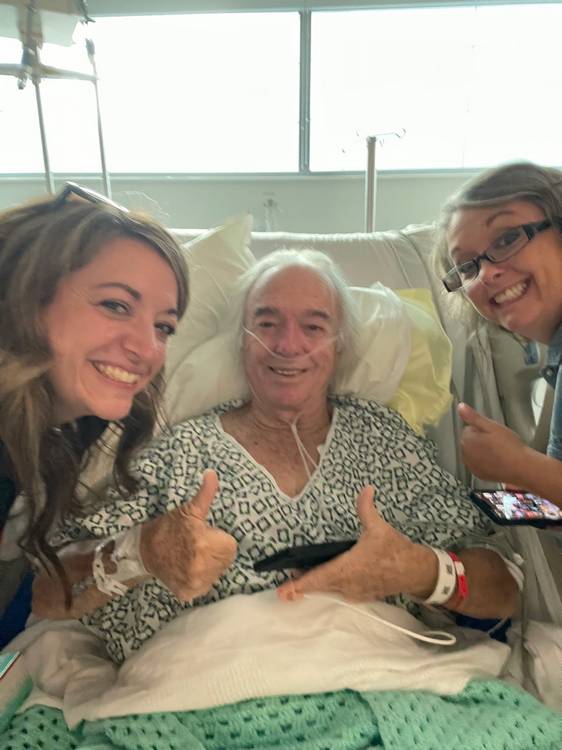
 Tim Tench on the day of his transplant with daughters Tesa and StaceyBindra encouraged Tench to speak with the transplant team at the Cleveland Clinic main campus. Tench didn’t hesitate. As he puts it, the choice was simple: “Live or die—and I picked living.”
He was placed on the transplant list January 29, 2024.
Lifebanc CEO Katie Payne says she hears stories similar to Tench’s story all the time at Lifebanc. She says awareness campaigns like Donate Life Month are times to share the impact organ donation has on lives every day.
“During Donate Life Month, stories like Tim’s remind us of what is truly at stake,” she says. “Behind every transplant is a person who wants more time; to be with family, to return to the things they love, and to keep living a full life. Organ donation makes those second chances possible.”
Each day, 17 people in the United States die waiting for an organ transplant, says Payne, and a single donor can save up to eight lives and more than 75 other people through tissue donation.
In a Donate Life Month message on the Lifebanc website, Payne, who knows firsthand the tragedy of loss and the power of organ donation, writes, “Organ donation is not just a medical act—it’s an act of compassion and legacy. The story of every organ recipient is one of hope renewed. Organ donation turns loss into life—giving parents more time to hold their child, and grandparents the chance to witness another family milestone.”
The transplant journey
When pulmonologist Dr. Alice Goyanis at Cleveland Clinic's main campus first mentioned transplant, Tench says his response was obvious to him.
"It’s kind of silly because [a transplant] is your only option,” he points out. “Without a transplant, you die. And I wasn't ready for that."
The process to qualify for the transplant list was extensive.
"You have to go through all these tests, which is an ordeal in and of itself, and I passed them all,” he recalls, saying he was convinced they’d find additional issues, since they test for everything. “I was sure that they were going to find some latent disease I had from when I was in second grade."
He was put on the national transplant list, United Network for Organ Sharing (UNOS) on January 29, 2024. The average wait time, he was told, was two to four months.
Some false starts and growing hope
In May 2024, Tench received his first call. "I got a call in May that they had lungs for me,” he recalls. “They asked, ‘Can I be down there in an hour or two hours?’ We were ready to go. That was around May 15th."
 Nine months before the transplant in Tim Tench's concert with his grandchildren.Tench says the months of waiting had been the toughest part of his ordeal at the time, but the lungs weren’t viable, and he was sent home.
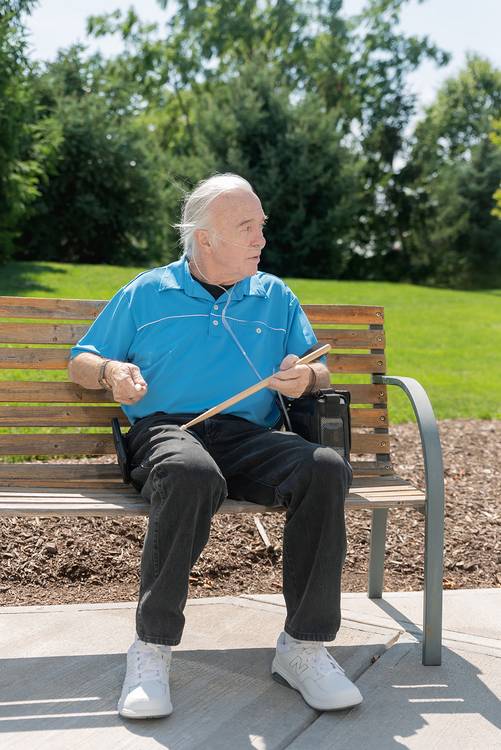
As 2024 continued, Tench's condition deteriorated. He was placed on oxygen 24/7, tethered to tanks but still determined to stay in shape for his eventual surgery.
On September 19, 2024, Tench received the lifesaving call.
Strangely enough, Tench had predicted the timing to his golf friends in Florida.
"They asked me, ‘When do you think you’ll get your lungs?’ I said, ‘Well, I don't know what month it'll be, but it's going to be on the 20th—because my birthday is on November 20 and I got sober in 1988 on January 20."
Although the lungs were deemed perfect for Tench, the surgery almost didn't happen.
He recalls the surgeon telling him, "If we went into a lab and fabricated lungs just for you, these would be your lungs—that's how good they are… but we have to tell you that you tested positive for COVID."
Tench was faced with the difficult decision of whether to go ahead, despite his illness, or pass on the lungs.
"I asked him, ‘what would you do if you were in my shoes,’” Tench recalls. “He goes, ‘I wouldn't hesitate.’ I said, ‘All right, let's go.’ And that was it."
The surgery was successful, but Tench's recovery was difficult. Complications kept him in the hospital for almost three months, while the average post-lung transplant stay is four to six weeks, he says.
Issues included isolation while he was COVID positive, psychosis from the medications, and a partially paralyzed diaphragm from the IPF that put him back in intensive care just as he was about to be discharged.
Cutting it close
It wasn't until his discharge that Tench learned just how close he had come to death. He says that when he asked the surgeon about the condition of his old lungs, the surgeon told Tench they were “really bad.”
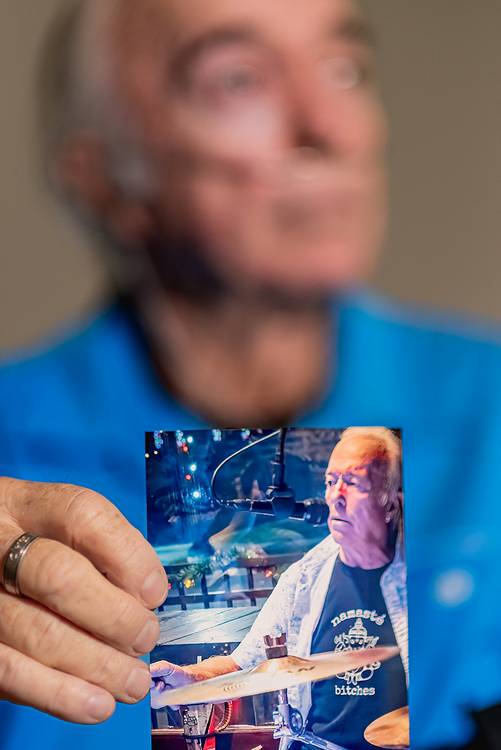
 Tim holds up a photo of himself drumming.Tench says he pushed a little more. “I said, ‘I have to ask, how much time do you think I had,’” he recalls. “I'm thinking a year, year-and-a-half, right? And he said, ‘We looked and we figured you had two to three weeks."
Tench remembers that hearing those words was the only time he felt scared. “That’s the only time I felt my knees actually get weak,” he recalls. “Because I thought, ‘My God, I was that close and I didn't realize it.’"
Throughout his journey, Tench says Lifebanc played a crucial supporting role, especially because he has a personal connection in his friend Colleen, who worked at the organization and has also received kidney transplants. He says Colleen was one of the first phone calls he made after finding out he needed a transplant, and Colleen was reassuring.
A new lease on life
Today, 18 months post-transplant, Tench is thriving. He splits his time between Bedford and Florida, no longer needs supplemental oxygen (except for a BiPAP machine at night to help his diaphragm), monitors his lung function daily using a smartphone app and spirometry device, and the data is transmitted directly to his doctors at the Cleveland Clinic.
Tench actively helps and coaches other transplant patients.
"The Clinic has hooked me up with a number of people to talk to that are in either pre-transplant who are trying to get on the list, and people who are post-transplant,” Tench says. “I told them, ‘Anytime you need me for [anything], I’m available.’” He says he also told Lifebanc he is available to support the organization’s mission.
Throughout his ordeal, Tench credits his girlfriend Linda, a retired nurse, as his primary caregiver and support system. "If it wasn't for her, I wouldn't be here," he says.
Tench says he’s also found strength in an unexpected source: prayer.
"I had so many people praying for me, people that I didn't know,” he says. “People that my daughters would come in and say, ‘Dad, so-and-so got in touch with me. There are people who I haven't talked to in 40 years, and somehow they found out.... And they said they're praying for me. I could feel that power, and it was incredible."
A message of hope
For others facing similar diagnoses, Tench offers both practical advice and hope. Don't research your condition online immediately after diagnosis, he advises, lean on your support system, and maintain hope.
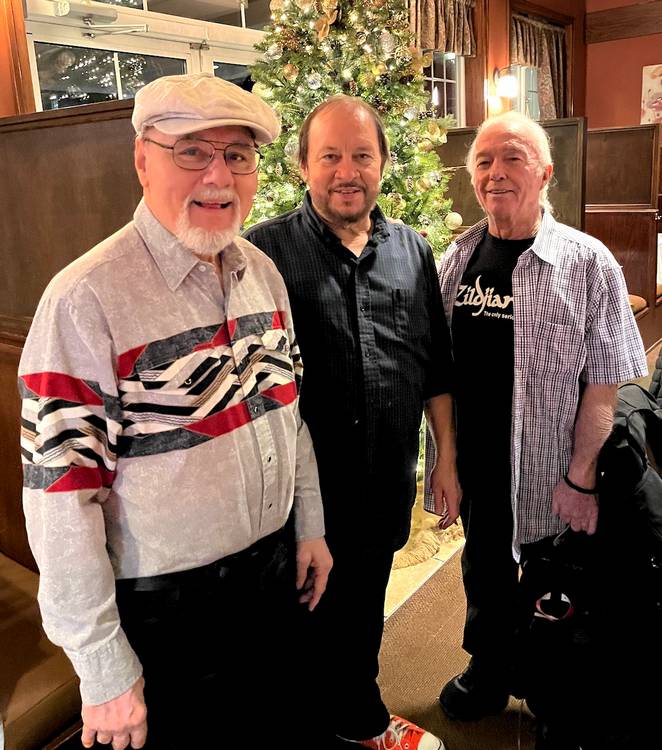
 Buzzy J and The Verbs“I'm just I'm just humbled,” he says. “Sometimes there are words that you don't have. ‘Humble’ wraps it all up for me."
As National Donate Life Month wraps up, Tench says he wants his story to serve as a powerful reminder of the life-saving impact of organ donation and the crucial work organizations like Lifebanc do in connecting donors with recipients.
Lifebanc’s Payne adds that people need to share their wishes with their loved ones, as well.
“One of the most important things people can do right now is talk with their family about their decision to be a donor,” she recommends. “In moments of uncertainty, families are often asked to make difficult decisions. When those wishes are known, it brings clarity and allows that decision to become a lasting gift—one that can save and heal lives.”
Tench says he completely agrees with Payne that people need to be open about their decisions to be donors so their wishes will be known.
"God bless the donors and their families,” he says. “Man, what an unselfish act. I had it on my license that I am a donor for 20 some years. And I never thought I'd be a recipient."