South Euclid looks ahead after auction of historic Notre Dame College campus

Last Thursday, May 7, the City of South Euclid participated in the auction of the former Notre Dame College campus, 4545 College Road, near Mayfield Road in South Euclid. The 102-year-old private Catholic college closed in May 2024 because of financial challenges, declining enrollment, and rising costs.
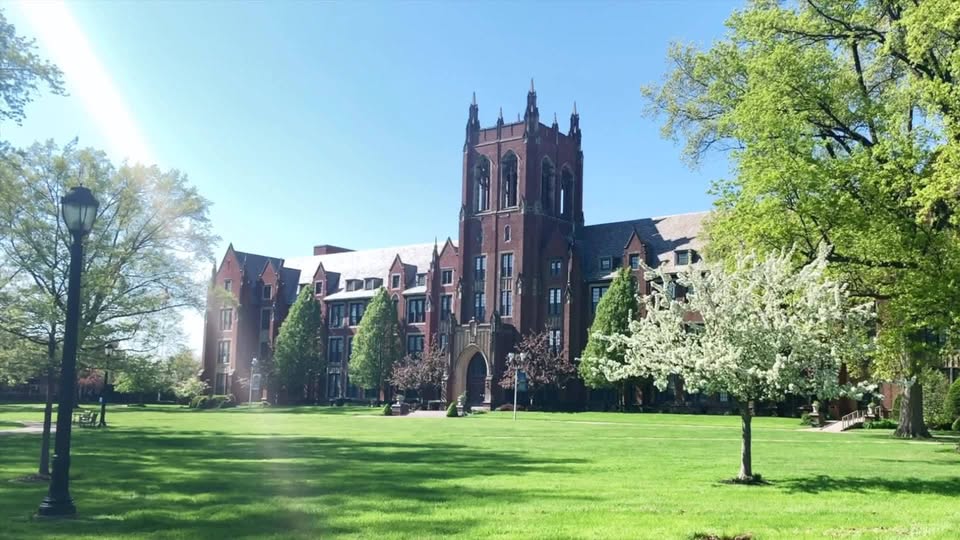
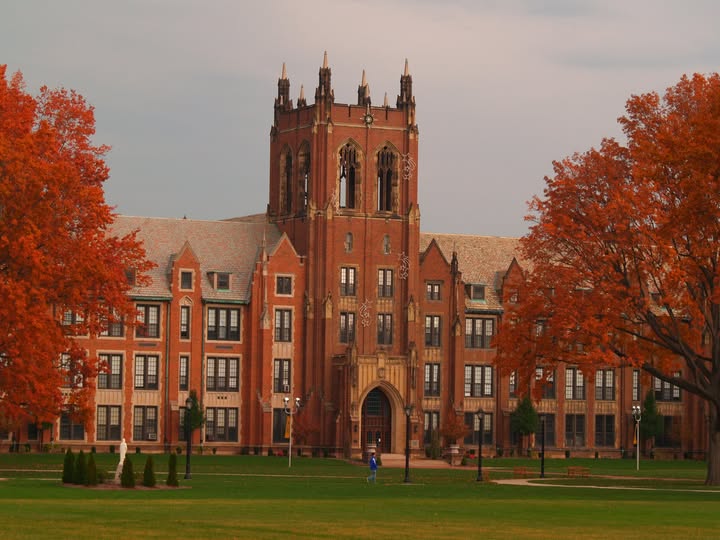
 Approaching the front of Notre Dame College in South Euclid.Akron Children’s Hospital was the successful bidder, subject to the remaining court and closing processes, while South Euclid was named the backup bidder.
If the Akron Children’s transaction does not move forward, South Euclid would be next in line to acquire the property.
South Euclid participated in the auction process because the nearly-50-acre property is one of the most significant sites in the community, said South Euclid planning and development director Michael Love.
Love says the property’s future will have a lasting impact on South Euclid residents, neighborhoods, and the local economy.
“As we have seen Akron Children’s growing presence in the eastern suburbs of Cleveland, we congratulate the hospital and appreciate that South Euclid is part of its plans to increase access to care for children in our community,” South Euclid officials said in a statement.
“We look forward to learning more about their vision for the property and working constructively with them and the community as the future of the site moves forward.”
Throughout the auction process, Love, parks and recreation director Daniel Subwick, and South Euclid Mayor Georgine Welo had conversations with all the participating bidders.
“The city’s involvement was always about protecting the long-term interests of South Euclid and ensuring the community had a seat at the table,” said Welo.
That interest in the site reflects the prominent role Notre Dame College has played in South Euclid for generations.
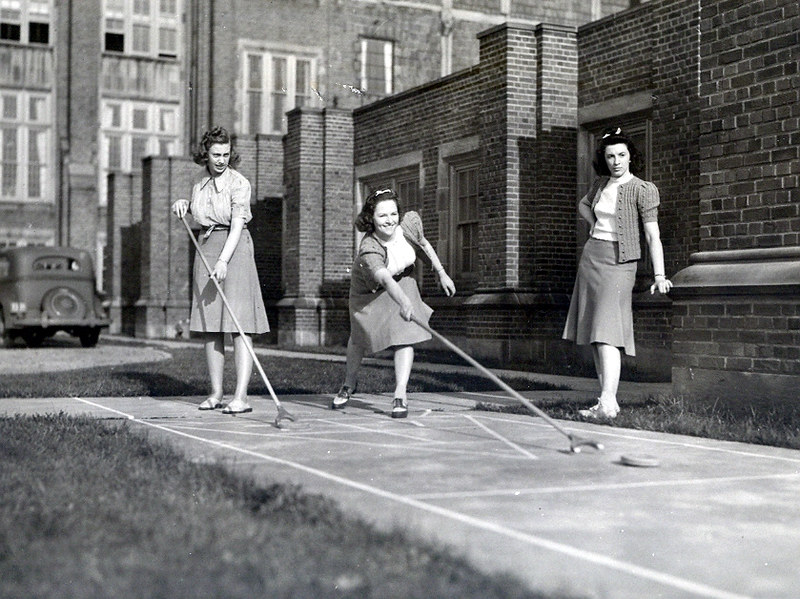
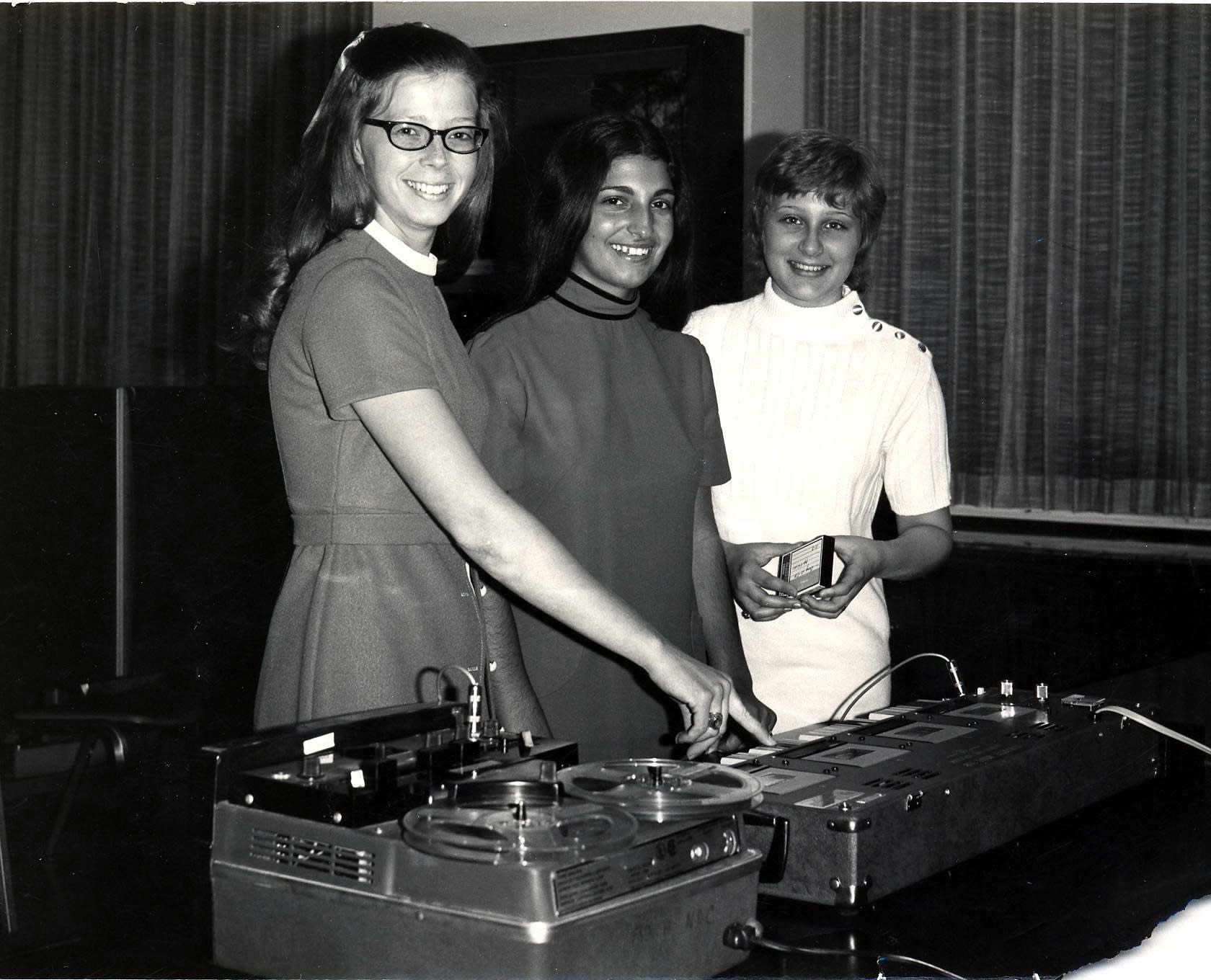
 Chris Piatak '72, Terri Greco '75, and Vaunita Nash '75 examine a master tape duplicator in the Multimedia Learning Center in the 1970s.Creating and continuing the legacy
South Euclid officials say the city will make sure any future vision considers opportunities to preserve meaningful public access and community use—continuing a legacy that has been part of the site for more than a century.
Notre Dame College was established as a women's college in 1922 by the Sisters of Notre Dame, and was coeducational from January 2001 until its closure.
The college first held classes in September 1922 at Notre Dame Academy on Ansel Road in what would become University Circle, overlooking the Cleveland Cultural Gardens.
Rapid growth required the Sisters to look for a new location for Notre Dame, and they subsequently acquired more than 40 acres for a new campus in South Euclid throughout 1923 and 1924, according to the Encyclopedia of Cleveland History.
In 1925, Thomas D. McLaughlin & Associates was hired to design the campus.
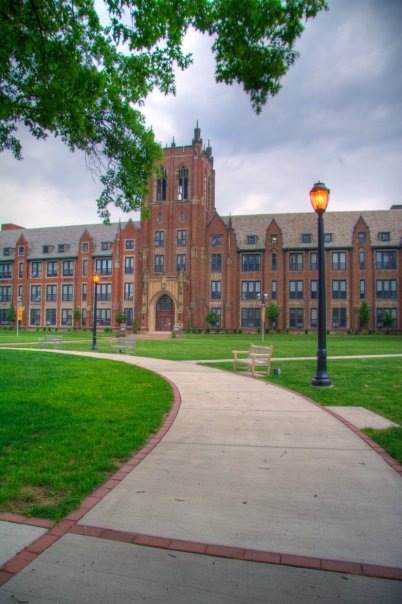
Construction of the first building began in late 1926 and in the fall of 1928, classes were held in the brand new Tudor Revival Administration Building, designed by Lima, Ohio native McLaughlin.
The building had classrooms, labs, offices, chapel, dormitory, dining hall, theatre, and a gymnasium.
The campus continued to expand in the decades that followed.
Over the years, Notre Dame added residence halls, a library, pool, gym, sports fields, and neighboring Regina High School after it closed in 2011—for a total of 10 campus buildings.
Along with its physical expansion, Notre Dame broadened its academic offerings.
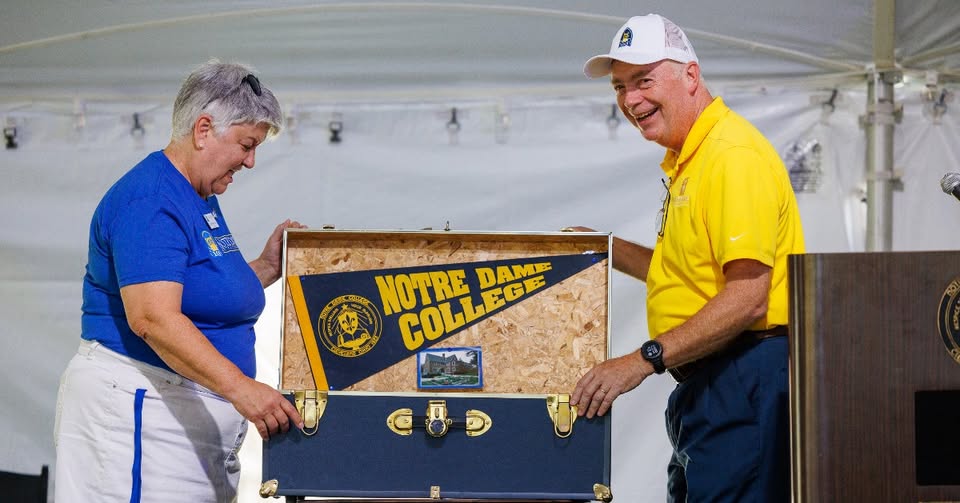
 Showing Notre Dame pride!Notre Dame was known for preparing women for successful careers with academic programs in education, business, and the sciences. After men were admitted as full-time students in 2001, programs were added in nursing, criminal justice, intelligence studies, graphic design, sports management, and health care administration.
After Notre Dame closed in 2024, Lake Erie College in Painesville became Notre Dame’s Institution of Record.
For many in South Euclid, the campus represents more than just a collection of buildings.
As Akron Children’s Hospital moves forward with plans for the former Notre Dame campus, Subwick is sentimental, yet positive.
“I think everybody knew Notre Dame College in one way or another,” he says. “Whether you visited it and walked on the quad—with the beauty of the administration building and the bucolic setting with all the big oak trees—or if you were an athlete or related to an athlete and went to their games.
“We're having very positive feelings about it,” Subwick continues, “This is going to be truly transformational.”